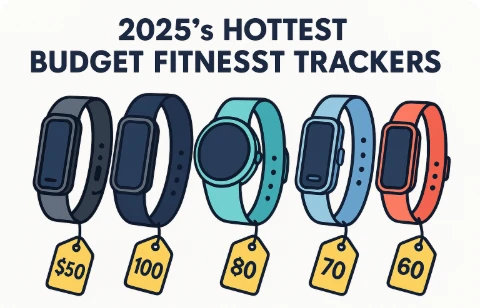
Budget fitness trackers in 2025 cover the essentials surprisingly well. If you want heart-rate tracking, sleep data, basic smart features, and in some cases GPS, you no longer need to move far beyond the $150 mark.
This roundup focuses on five affordable models that stand out for different reasons: extra-long battery life, built-in GPS, brighter displays, or broader smartwatch features. Together, they show how much range now exists in the entry and mid-budget segment.
What stands out in this year's budget segment
Most low-cost trackers now handle the basics reliably: step counting, all-day heart-rate monitoring, sleep tracking, notifications, and water resistance suitable for everyday use. The bigger differences appear in the details, especially GPS support, battery life, screen quality, and how far each device pushes into smartwatch territory.
- Xiaomi Smart Band 9 emphasizes value and battery endurance.
- Samsung Galaxy Fit 3 offers a polished band-style experience with strong phone integration.
- Fitbit Charge 6 pushes furthest into premium tracking features.
- Amazfit Active 2 brings advanced navigation and smartwatch tools to a lower price point.
- Amazfit Bip 5 targets buyers who want a larger watch-style interface without paying much more.
Best budget trackers at a glance
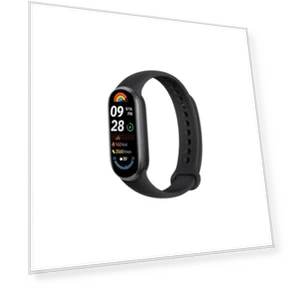
Xiaomi Smart Band 9
This is the most straightforward value pick in the group. The Smart Band 9 keeps the slim tracker format, adds a bright AMOLED screen, and stretches battery life far beyond most watch-style alternatives.
If you mainly want dependable everyday health tracking and do not mind relying on your phone for GPS, this one makes the strongest case for a low-cost purchase.
Why it stands out:
- 1.62-inch AMOLED display with strong outdoor brightness
- More than 150 exercise modes
- 5ATM water resistance
- Notifications and basic smart controls in a very light form factor
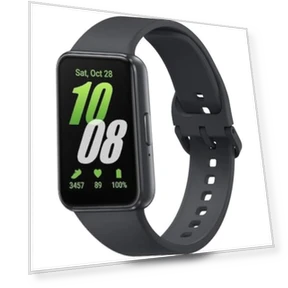
Samsung Galaxy Fit 3
The Galaxy Fit 3 feels more polished than many low-cost bands thanks to its larger AMOLED screen, cleaner hardware, and better day-to-day phone integration.
It still skips standalone GPS, but it compensates with strong health metrics, long battery life, and useful extras like music control, a camera trigger, and SOS support.
Why it stands out:
- 1.6-inch AMOLED display in a lightweight aluminum body
- 100+ workout profiles
- Sleep coaching and stress tracking
- Very approachable choice for Samsung users
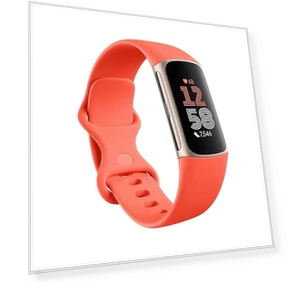
Fitbit Charge 6
The Charge 6 sits closest to the premium edge of this list, but it justifies that place with stronger workout tools, more mature software, and a broader mix of health and smart features.
If you want a tracker rather than a full smartwatch, but still care about built-in GPS, better exercise accuracy, and extras like payments or gym heart-rate broadcasting, this is the most complete option here.
Why it stands out:
- Built-in GPS for phone-free run and ride tracking
- Improved heart-rate accuracy during workouts
- Google Maps directions and Google Wallet support
- About 7 days of battery life with 5ATM water resistance
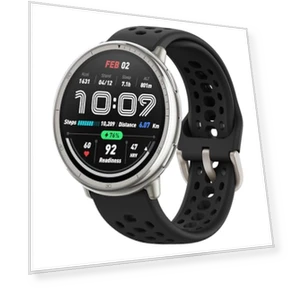
Amazfit Active 2
The Active 2 does the best job of blurring the line between a budget fitness tracker and a more capable smartwatch. It combines a bright AMOLED display, multi-system GPS, and stronger navigation features than most low-cost rivals.
That makes it especially appealing if your workouts or walks happen outdoors and you want more guidance on the wrist instead of a basic stats-only band.
Why it stands out:
- 1.32-inch AMOLED display with up to 2,000 nits brightness
- Offline maps with turn-by-turn guidance
- 160+ sports modes and broad health sensors
- Alexa, offline voice assistant, and Bluetooth calling
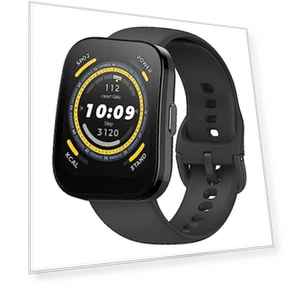
Amazfit Bip 5
The Bip 5 is aimed at buyers who want a bigger, easier-to-read watch-style interface without moving into a much more expensive category. Its large display makes it feel more approachable than a narrow fitness band.
It is less specialized than the Active 2 and less training-focused than the Charge 6, but it delivers a broad everyday feature set for a relatively low price.
Why it stands out:
- Large 1.91-inch display
- Built-in GPS with multi-satellite support
- 120+ workout modes
- Bluetooth phone calling and Alexa support
Quick comparison
The main decision points are easy to spot once the list is reduced to the basics. Xiaomi wins on battery life, Fitbit and both Amazfit watches cover built-in GPS, while Samsung offers one of the cleanest band-style experiences for the price.
| Tracker | Price | Built-in GPS | Battery life | Water resistance | Best-known strength |
|---|---|---|---|---|---|
| Xiaomi Smart Band 9 | $58.99 | No | Up to 21 days | 5ATM | Excellent battery life at a very low price |
| Samsung Galaxy Fit 3 | $58.78 | No | Up to 13 days | 5ATM + IP68 | Polished ecosystem fit and strong day-to-day usability |
| Fitbit Charge 6 | $119.95 | Yes | About 7 days | 5ATM | Most complete workout and health feature mix |
| Amazfit Active 2 | $99.99 to $129.99 | Yes | About 10 days | 5ATM | Offline maps and smartwatch-level versatility |
| Amazfit Bip 5 | $59.99 | Yes | About 10 days | 5ATM | Large display and broad everyday feature set |
Bottom line
There is no single winner for every buyer in this group. The better pick depends on whether you value longer battery life, built-in GPS, a larger watch-style screen, or tighter phone and app integration.
If the goal is simply to get reliable health tracking without overspending, all five models show that the budget end of the market is no longer limited to bare-bones hardware.