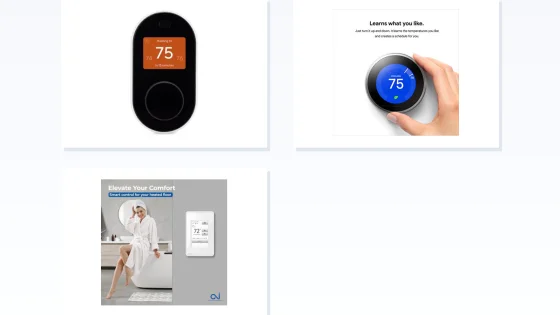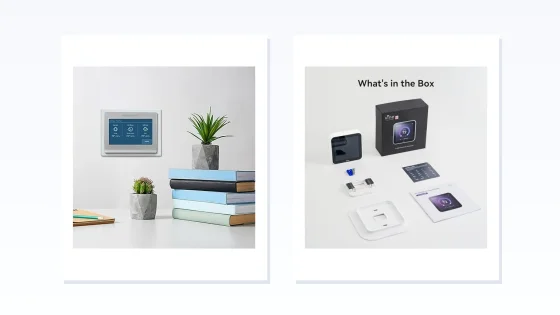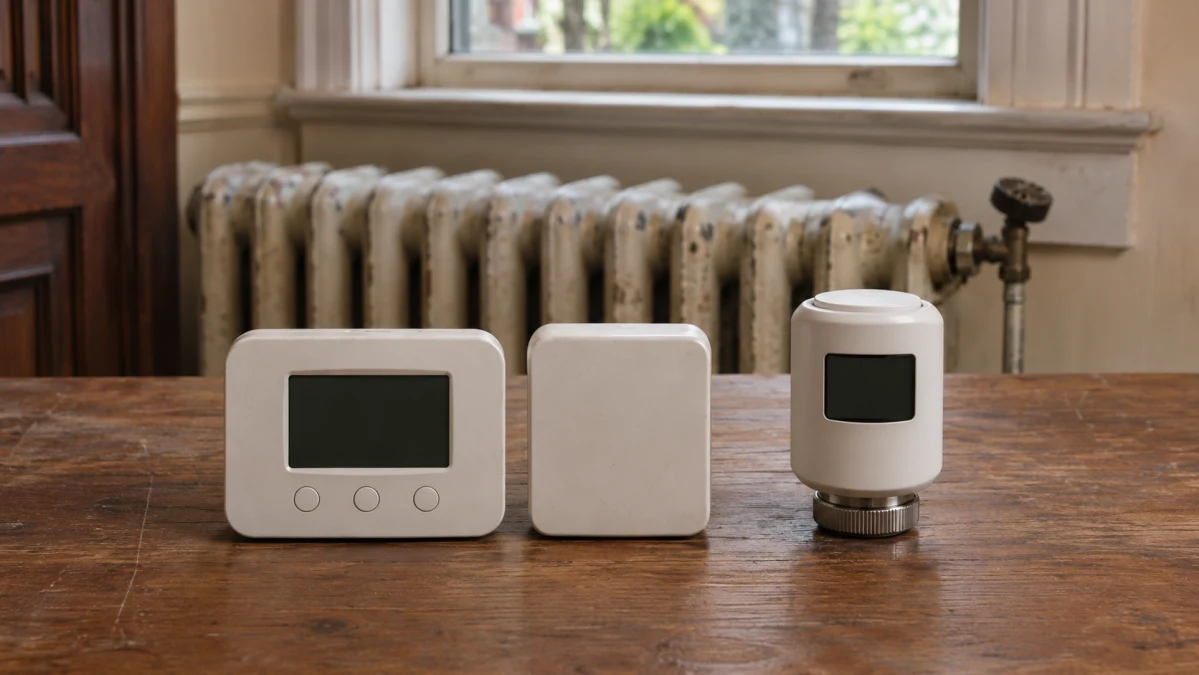
Replacing the room-temperature control that requests boiler heat points toward an RF thermostat-and-receiver kit. Changing an individual radiator’s temperature control points toward a compatible smart radiator control. Start with the job you want done—not the word “thermostat” on the box or the promise of app control.
Choose the device type first, then check its exact installation requirements. For a US installation, neither a dry-contact listing nor a matching radiator thread settles compatibility. And if you want a radiator’s schedule to start the boiler, that needs a verified demand connection, not just local scheduling.
Start with the existing control and the result you want
Identify what your existing control does and what you want to change:
| Your replacement goal | Group to investigate | Access or permission needed |
|---|---|---|
| Replace the room-temperature control that requests boiler heat | RF thermostat-and-receiver kits listing dry-contact boiler control | Access to the boiler controls and authorization to alter them |
| Replace the local temperature control on one radiator | Smart radiator valve controls | Permission to change that radiator’s control, followed by confirmation of valve and heating-system compatibility |
These are different jobs. A radiator control can address local temperature adjustment without replacing the room control responsible for requesting boiler heat. Replacing the room control, meanwhile, does not itself upgrade an individual radiator’s valve control.
Physical access to the boiler is not the same as authorization to alter its controls. Permission to change a radiator control is a separate question; do not assume that either permission includes the other.
Replacing the room control that requests boiler heat
RF thermostat-and-receiver kits listing dry-contact boiler control are the group to investigate when you want to replace the heat-requesting room control. The receiver provides the connection to the heating controls, so its exact variant and installation requirements matter as much as the room unit.
In tado°’s explanation of its V3+ and earlier arrangements, the room thermostat compares measured temperature with its target. In the wireless arrangement, it communicates with a receiver wired to the boiler, and that receiver controls heating. Here, “wireless” describes the room-controller-to-receiver link—not an absence of boiler-side wiring or permission to undertake electrical work yourself. Other kits need their own installation instructions; this arrangement does not identify their wiring.
The supplier of the Smart WiFi Thermostat lists a thermostat and receiver, 433MHz RF communication, dry-contact boiler control, and a 110–220V AC receiver supply. Those are relevant specifications for this replacement job, but they are not confirmation that the kit suits your US boiler installation.
The Smart WiFi Thermostat is therefore a candidate to investigate for replacing the room control, rather than upgrading one radiator. Its supplier lists three AA batteries or USB Type-C power for the controller, separately from the receiver’s AC supply. Tuya Smart Life App control is listed for Wi-Fi models only, so confirm which configuration you would receive if app control matters to you.
Before buying, identify the receiver and apply the two electrical checks below. Neither the tado° arrangement nor another manufacturer’s receiver documentation establishes this kit’s installation match.
Replacing a compatible individual radiator control
Smart radiator valve controls are the conditional route when the intended change is at an individual radiator. Scheduling that radiator or adjusting its temperature remotely is a local-control function; it does not, by itself, establish how the boiler receives a heat request.
The SONOFF TRVZB manual describes removing the old thermostatic control, checking adapter requirements, loading batteries, mounting the device at the valve interface, and initializing it. That procedure concerns the control on an appropriate existing valve—not replacement of the valve body. It is not a promise of universal fit, installation without draining, or freedom from professional intervention.
For app setup, the manual directs users to eWeLink and a SONOFF Zigbee gateway. Recommended gateways include ZBBridge-P, ZBBridge-U, NSPanel Pro, and iHost; it calls for current gateway software and pairing in manual mode. Do not extend that onboarding path to every Zigbee gateway or Tuya device.
SONOFF describes radiator scheduling and remote temperature adjustment. Those functions suit a goal such as giving one room its own temperature timetable, provided the installation is compatible. Whether heat will be available at the scheduled time is a separate question.
The Smart Thermostatic Radiator Valve, identified by its supplier as the TRVZB Smart Zigbee Thermostatic Radiator Valve, illustrates this local-control route. The supplier specifies eWeLink and a SONOFF Zigbee gateway and lists the Tuya app and Tuya gateway as incompatible. An existing Tuya setup is therefore not a reason to assume this control will fit your smart-home arrangements.
Check what the particular bundle contains before budgeting for it. SONOFF describes adapters as packaged accessories and says batteries are not included; the manual specifies three 1.5V LR6 alkaline AA batteries. The manufacturer’s accessory description does not establish the supplier bundle’s exact adapter inventory, and references to compatible gateways do not mean a gateway is included. Mechanical fit and heating-system suitability still need separate confirmation.
For a boiler kit, verify the exact receiver and its two electrical matches
A receiver needs two separate matches: its control output must suit the boiler interface, and its power input must suit the available supply. A dry-contact output does not tell you how the receiver itself is powered.
Obtain the installation manual and wiring diagram for the exact receiver variant being sold. If the supplier cannot identify that variant, do not buy yet. Use its documentation to check:
- The boiler-control connection. Match the output interface, terminal functions, and switching ratings to the actual boiler or existing control interface. Dry-contact wording is a specification to verify, not proof that the receiver is interchangeable with your current control.
- The receiver’s power supply. Match its required supply voltage and frequency to the available US supply. Keep this separate from both the boiler-control output and the room controller’s battery or USB power.
For example, SALUS lists its RXRT510 receiver with a 230V supply, a volt-free output, and L/N/COM/NO terminals. The separate supply and output specifications show why both checks matter. Its listed markets are Germany, the Netherlands, and the UK; those details establish neither US suitability nor the identity of the Smart WiFi Thermostat’s receiver.
For the Smart WiFi Thermostat, the supplier’s 110–220V AC statement leaves the supply frequency, terminal functions, switching ratings, and exact boiler-interface match unresolved. Require documentation covering the exact US installation or explicit manufacturer confirmation of its applicability. If the receiver identity, interface, ratings, or supply match remains unresolved, do not buy yet.
For a radiator control, verify both valve fit and heating-system suitability
An existing radiator control is not proof that a smart replacement will fit. Before choosing one, identify:
- The valve-body make and model, and whether the mechanism is thermostatic or manual.
- The connection and the exact adapter, if one is needed.
- Whether the system uses hot water or steam, and its piping configuration.
You need manufacturer support for both the mechanical combination and the heating application. The TRVZB manual specifies an M30 x 1.5mm connection, but that describes attachment. A matching thread alone does not establish suitability for your hot-water or steam system.
The distinction between a replaceable thermostatic head and a manual valve can change the scope of the job. In tado°’s V3+ and earlier guidance, the thermostatic head moves a valve-body pin to vary hot-water flow. Its Smart Radiator Thermostat replaces a compatible thermostatic head, not a manual tap-style valve. For a manual valve, tado° describes professional replacement with a suitable M30 x 1.5mm thermostatic valve before fitting its control.
That remedy is specific to the documented tado° arrangement, not a universal SONOFF solution. Nor is an adapter a universal remedy for an incompatible valve or heating application.
A mismatch can turn an intended control-only purchase into a job requiring valve-body assessment or a different solution. For TRVZB, defer purchase until the exact control, valve, adapter, and hot-water or steam configuration is supported for your US installation. Confirm the actual bundle’s accessories separately: having an adapter in the box is not the same as having the right adapter for a supported installation.
Will the radiator schedule also request boiler heat?
A radiator schedule and a boiler heat request are different functions. Setting a local temperature target does not establish that the boiler will supply heat at that time. This matters if your goal is not merely to adjust a radiator when heating is available, but to have that radiator’s demand start the heating.
For tado° V3+ and earlier, assigned Smart Radiator Thermostats can request heat through a Zone Controller. Its wireless example uses a Wireless Temperature Sensor and a boiler-connected Wireless Receiver. An unassigned room does not communicate with a Zone Controller; in the documented V3+ arrangement, radiator devices request heat from either the Smart Thermostat or Wireless Receiver, not both.
The devices, boiler connection, and room assignment therefore determine whether radiator demand reaches the boiler. That tado° configuration is not a US installation recommendation or evidence that the Smart WiFi Thermostat and TRVZB work together.
Coordinated boiler demand remains unverified for the Smart WiFi Thermostat, TRVZB, and their combination. Scheduling, shared branding, app support, or a wireless protocol does not establish the missing demand connection.
If radiator-triggered boiler heat is essential, obtain documentation naming the exact devices, gateway or controller, operating mode, assignment settings, and connection carrying radiator demand to boiler control, including applicable version and regional limits. Confirm that pathway before purchasing rather than choosing on local scheduling alone.
Choose the RF thermostat-and-receiver group to replace the heat-requesting room control when you have boiler-control access, authorization, and a confirmed receiver-to-US-installation match. Choose the radiator-control group to replace an individual control when you have permission, supported valve fit, and confirmed heating-system suitability. If the goal also requires radiator-triggered boiler heat, require verified coordination. Until those conditions are met, neither product example is a purchase recommendation for your installation.