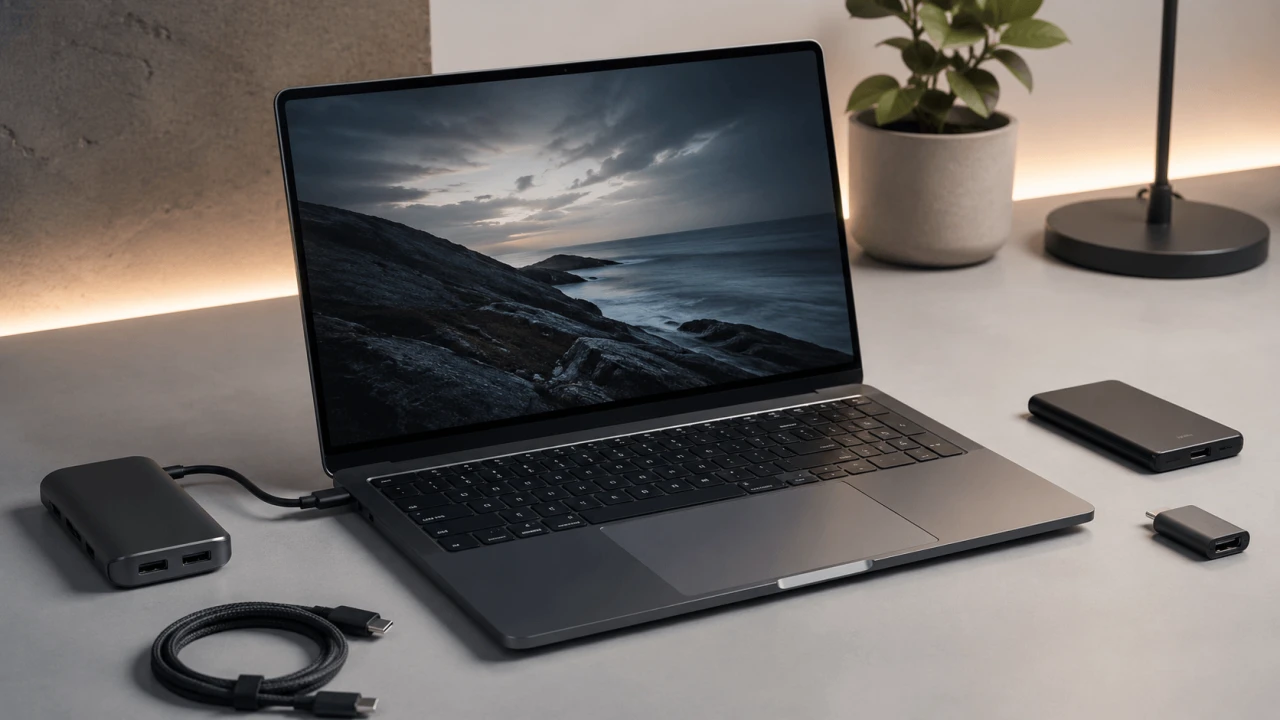
In early 2017, the conversation around a new MacBook Pro was not mainly about a radical redesign. Apple had already made its major visual and port shift with the 2016 MacBook Pro generation: a thinner body, USB-C and Thunderbolt 3, the Touch Bar on higher-end models, and a substantially different keyboard design. The real question in 2017 was whether Apple could make that new platform feel more convincingly “Pro.”
That is why MacBook Pro 2017 rumours drew so much attention. Buyers were looking for faster processors, stronger graphics, better battery efficiency, more headroom for demanding work, and possibly a lower entry price. For people editing video, working with large photo libraries, compiling software, or connecting several peripherals at a desk, those details mattered more than another cosmetic update.
Why the 2017 MacBook Pro rumours mattered
The 2016 redesign had split opinion. Some users liked the thinner design, high-quality display, and modern I/O direction. Others were frustrated by the all-USB-C transition, the price, and doubts about whether the new models delivered enough value for professional workloads.
By March 2017, attention had shifted to the next refresh. The biggest rumour themes were practical rather than theatrical:
- Processor upgrades: buyers expected newer Intel chips with better performance and efficiency.
- Memory limits: many professional users wanted more flexibility than 16 GB RAM, even if that was far from certain.
- Graphics performance: the 15-inch MacBook Pro remained especially important for creative workloads.
- Battery life: users wanted steadier real-world endurance after mixed reactions to the 2016 models.
- Pricing: a more accessible 13-inch entry point would have been one of the most practical improvements.
The wider processor backdrop
The MacBook Pro speculation also unfolded during a more competitive processor cycle. AMD’s Ryzen launch changed a lot of performance-per-watt conversations in the PC market and made writers revisit assumptions about where premium laptops and desktops could go next. That did not mean Apple was about to move the MacBook Pro to AMD Ryzen, but it did make buyers more sensitive to what counted as a meaningful update.
For Apple users, the practical question was simpler: would the next MacBook Pro deliver a clear step up from the 2016 generation, or would it amount to a small specification bump that looked larger in headlines than in daily use?
What Apple later confirmed
For historical context, Apple later refreshed the MacBook Pro line in June 2017. The update brought Intel Kaby Lake processors, stronger standard discrete graphics on the 15-inch model, faster SSD performance, and a new $1,299 13-inch MacBook Pro configuration. In other words, the final 2017 story was mostly about performance, graphics, storage, and pricing rather than a new industrial design.
Not every rumour became reality. The 2017 refresh did not turn into a dramatic rethink of the product. Apple kept the same design direction introduced in 2016 while making the lineup easier to recommend to buyers who had deliberately waited for a second-generation version of the new chassis.
What the 2017 MacBook Pro cycle tells us now
The 2017 MacBook Pro cycle is still useful because it shows how “new model” headlines can hide different kinds of change. Some launches are redesigns. Some are platform transitions. Others are practical refreshes that improve processors, storage, graphics, and entry pricing without changing the look of the machine very much.
That distinction mattered in 2017 and still matters now. Buyers often react strongly to rumor cycles because they are trying to judge not only whether a product will improve, but whether it will improve in the ways that actually affect ownership: workflow speed, adapter burden, thermal behavior, battery life, and overall value.
Bottom line
The “new MacBook Pro” rumours of early 2017 mattered because they captured a moment when Apple’s professional laptop strategy was under close scrutiny. The eventual 2017 update did not reinvent the MacBook Pro, but it addressed several practical concerns with newer processors, improved graphics, faster storage, and a lower-cost 13-inch configuration.