
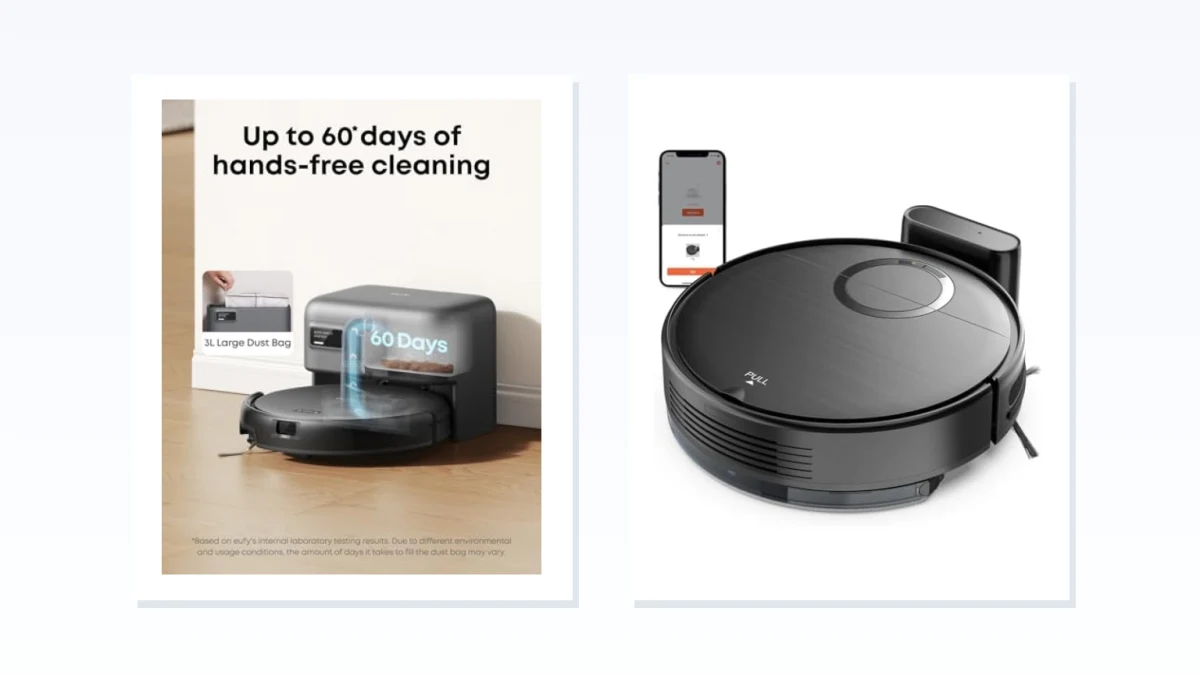
Choosing between a vacuum-only robot and a robot vacuum with mopping is less about which type is more powerful and more about which cleaning system matches your floors and maintenance tolerance. A mopping module does not automatically mean weaker suction, a smaller useful dustbin, or worse carpet cleaning; some high-end hybrids are designed to compete directly with dedicated vacuums. The real tradeoff is simpler: vacuum-only robots avoid the entire wet-cleaning system, while 2-in-1 models can maintain hard floors but add mop hardware, water handling, and more parts that need cleaning.
For carpet-heavy homes, simplicity and dry pickup usually matter most. For homes dominated by sealed hard flooring, a capable vacuum-and-mop robot can replace more manual floor cleaning. Mixed-floor homes require a closer look at carpet detection, mop lifting or removal, and no-mop controls.
Floor Type and Cleaning Priorities: Quick Decision Signals
- Mostly carpet or rugs, with little need for automated wet cleaning. → Start with a vacuum-only robot.
- Mostly sealed tile, vinyl, laminate, or other mop-safe hard flooring. → A 2-in-1 robot is usually more useful.
- Mixed hard floors and carpet. → Consider a 2-in-1 only if its carpet strategy is suitable: automatic mop lifting, mop removal, carpet avoidance, or configurable no-mop zones.
- You want the simplest maintenance routine possible. → Vacuum-only removes water tanks, mop pads, dirty-water handling, and mop-washing components from the equation.
- You already vacuum adequately but dislike routine hard-floor mopping. → A 2-in-1 can provide substantially more value than another dry-only cleaner.
- You expect the dock to make the system completely maintenance-free. → Neither type qualifies. Self-emptying and self-washing docks reduce intervention; they do not eliminate cleaning and consumable replacement.
Scope: General-Purpose Robot Vacuums, Classified by Cleaning System
This comparison covers general-purpose robot vacuums and separates them by one practical distinction: whether they perform only dry vacuuming or also contain a wet-mopping system.
Pet-hair features, anti-tangle brushes, LiDAR, cameras, obstacle avoidance, self-emptying docks, and other navigation or convenience features can appear on either side. They are worth comparing, but they do not determine whether a robot is fundamentally vacuum-only or vacuum-and-mop.
The important question is what additional cleaning job the mopping hardware performs—and whether that job is useful enough in your home to justify its extra upkeep.
Dedicated Vacuum-Only Robots: The Simpler Choice for Dry Cleaning
A vacuum-only robot makes the most sense when most of the floor area you actually want the robot to clean is carpet or rugs, or when automated mopping provides little value to you.
The main advantage is not that vacuum-only robots are inherently more powerful. They are not. Suction capability varies widely within both groups, and manufacturer-rated Pa figures should not be treated as a direct measure of real-world cleaning performance across different brands. Brush design, agitation, airflow, floor contact, navigation, carpet behavior, and how well the robot handles hair can matter just as much.
What vacuum-only robots do offer is a simpler system. There is no mop to wet, wash, dry, raise, remove, or keep away from unsuitable flooring. There is no onboard water circuit to maintain. If the robot is paired with a self-emptying dock, routine work can largely center on the brush system, filters, wheels, sensors, dust bag or bin, and occasional removal of accumulated hair and debris.
When comparing the vacuum-only models shown here, prioritize:
- Carpet and hard-floor pickup, rather than the advertised suction number alone.
- Main-brush design, especially with long hair or pets.
- Dust handling: onboard bin capacity, self-emptying support, and replacement-bag requirements.
- Navigation and obstacle avoidance, which determine whether the robot can consistently reach the areas that need cleaning.
- Carpet behavior, including automatic suction adjustment where supported.
- Filter maintenance and replacement requirements.
- Cleaning under furniture, including robot height and navigation hardware.
Vacuum-only is also the safer default when your hard flooring should not routinely be wet-mopped. Flooring manufacturers differ on acceptable cleaning methods, so unsealed wood and other moisture-sensitive surfaces should not be treated as automatically compatible with a robot mop.
Some products blur the boundary by including a basic detachable cloth. A passive cloth attachment does not provide the same cleaning action as an actively controlled mopping system. Check whether the robot actually dispenses water and whether the mop uses any active movement before assuming it can replace meaningful hard-floor mopping.
2-in-1 Robot Vacuums: More Useful on Hard Floors, More Complex to Maintain
A 2-in-1 robot is most compelling when a significant portion of the home consists of mop-safe hard flooring. Instead of collecting only loose dust, crumbs, and hair, the robot can also wipe the floor during the same cleaning cycle or during a dedicated mopping run.
Modern hybrids should not be assumed to sacrifice vacuuming performance simply because they contain mopping hardware. Some premium models combine strong dry pickup with sophisticated mop systems and automated docks. The important comparison is therefore not "vacuum power versus mopping." It is whether the particular hybrid performs both jobs well enough for your floor mix.
Mopping systems also differ substantially. Common designs include:
- Passive or lightly pressurized pads that are dragged across the floor.
- Vibrating or sonic-style pads that add repeated movement while mopping.
- Dual rotating mop pads that provide more active mechanical scrubbing.
- Roller-style mops that continuously rotate across the floor, sometimes with systems designed to rinse or manage the roller during cleaning.
These mechanisms should not be treated as equivalent. A basic damp pad may be adequate for routine dust and light marks, while more active systems are generally better suited to frequent hard-floor maintenance. Even an advanced robot mop, however, should not be assumed to remove every dried or sticky spill.
For the 2-in-1 models shown here, look beyond the suction specification and compare:
- Mop mechanism and how much active scrubbing it provides.
- Water delivery, including whether the robot electronically controls water flow.
- Carpet detection and what happens when the robot reaches carpet.
- Mop lift height or automatic mop removal, where supported.
- No-mop zones and room-specific cleaning controls.
- Dock functions, such as dust auto-emptying, mop washing, mop drying, and clean-water refilling.
- Clean- and dirty-water handling at the dock.
- Accessibility of trays, tanks, filters, and mop components for manual cleaning.
Carpet handling deserves particular attention in mixed-floor homes. A robot that can raise its mop may work well with low-pile rugs, while a different floor plan or thicker carpet may require automatic mop removal or complete carpet avoidance. Do not assume that the presence of "mop lifting" alone makes every hybrid suitable for every rug.
Maintenance Is the Biggest Practical Difference
Both robot types require maintenance. Brushes collect hair, filters become dirty, sensors need wiping, wheels can trap debris, and self-emptying docks eventually need attention.
A 2-in-1 simply adds another maintenance system.
Depending on the design, that may include:
- washing and drying reusable mop pads;
- refilling clean water;
- emptying dirty water;
- cleaning the dock's mop-washing tray;
- rinsing removable water-system components;
- replacing mop pads or rollers when worn;
- preventing dirty water or wet components from sitting neglected for long periods.
Even docks that automatically wash and dry the mop do not remove all of these tasks. They automate the cleaning cycle, but the water tanks, washing area, filters, bags, and other removable components still require periodic attention according to the manufacturer's instructions.
Leaving a dirty mop or wastewater system wet for extended periods can also produce unpleasant odors and unhygienic buildup. This is why manufacturer maintenance instructions frequently call for cleaning and drying wet components rather than simply leaving them installed indefinitely.
If you know you are unlikely to maintain the wet side of the robot, buying an elaborate mopping system may actually reduce convenience rather than increase it.
Common Robot Vacuum Buying Mistakes
-
Assuming vacuum-only automatically means stronger suction. It does not. Hybrids can have excellent vacuuming systems, and advertised Pa figures are not enough to compare real cleaning performance between machines.
-
Choosing by Pa alone. Brush design, floor contact, airflow, navigation, carpet behavior, and debris type all affect pickup. A larger advertised number does not guarantee that one robot will clean your carpet better than another.
-
Treating every "mop" as equivalent. A passive damp pad, vibrating pad, spinning discs, and roller mop deliver very different cleaning action. Identify the actual mechanism before comparing models.
-
Ignoring carpet behavior on a 2-in-1. In a mixed-floor home, the ability to detect carpet and appropriately lift, remove, or avoid the mop can matter more than the mop's headline specifications.
-
Assuming a self-cleaning dock means zero maintenance. Auto-emptying, washing, drying, and refilling reduce repetitive chores, but dock trays, water tanks, dust bags, filters, and mop components still need service.
-
Assuming all hard floors are safe to mop. Wet cleaning should only be used where the flooring manufacturer permits it. Moisture-sensitive or unsealed flooring requires additional caution.
-
Comparing onboard dustbin size without considering the dock. A smaller bin matters far less when the robot reliably empties itself after cleaning. Without a self-emptying dock, bin capacity becomes much more relevant.
Vacuum-Only or 2-in-1: Which Should You Choose?
Choose a vacuum-only robot when dry debris pickup is the main job, your home is dominated by carpet or rugs, you do not need routine automated mopping, or you want to minimize the number of components that require maintenance.
Choose a 2-in-1 robot vacuum and mop when you have substantial mop-safe hard-floor area and automated wet cleaning would genuinely replace a chore you otherwise perform manually. In mixed-floor homes, make carpet management one of your primary selection criteria rather than an afterthought.
The deciding factor is not whether one category is universally more powerful or more advanced. It is whether the mopping system will do enough useful work in your home to justify owning and maintaining it. A simpler vacuum-only robot that matches your floors is a better purchase than a feature-heavy hybrid whose mop you rarely use—and a capable hybrid can be the better choice when hard-floor maintenance is a regular part of your routine.