
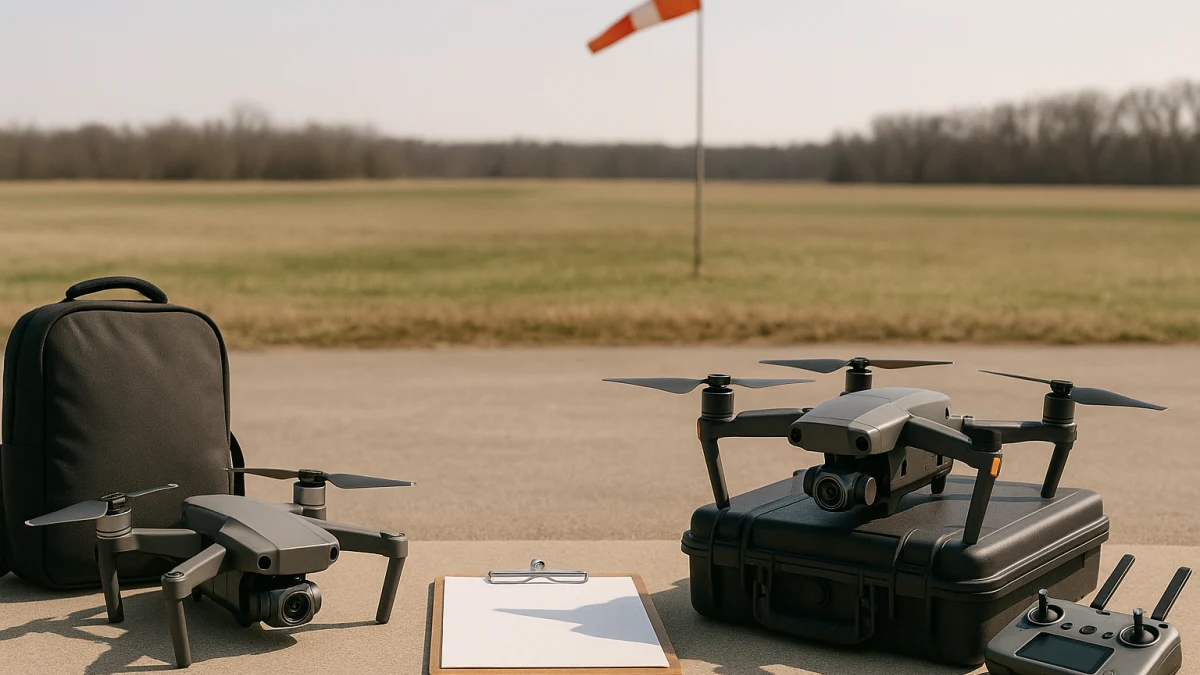
A normal drone category page can mix 249 g Mini-style drones, 6K or 8K camera drones, Hasselblad wording, obstacle avoidance, and long flight-time claims without explaining what those clues mean for a US shopper. This comparison starts with the weight-class fork: is a compact under-250 g camera drone enough, or is a larger camera drone worth the extra kit size and rule checks?
Read 248 g, 249 g, under 250 g, and under 0.55 lb as portability clues, not as a complete FAA answer. Read 585 g, 724 g, 1220 g, 1.97 lb, 2.99 lb, 6K, 8K, larger sensor language, gimbals, and obstacle sensing as reasons to investigate capability, not as automatic proof of better field performance.
Start with the 249 g, camera, and rule-check fork
| If you need... | Better fit |
|---|---|
| The smallest camera-drone kit for packing, storage, and lighter ownership checks | Under-250 g camera drone |
| More emphasis on 5.1K, 6K, 8K, Hasselblad wording, larger sensor references, obstacle sensing, or long listed flight times | Larger camera drone |
| Prop guards, lights, payloads, or a different battery on a 249 g-style drone | Verify final takeoff weight before treating it as under 250 g |
| Goggles, low latency, repairability, and acrobatic flying | Use a separate FPV or racing drone guide |
Use six checks as you compare: final takeoff weight, total kit size, camera and gimbal ambition, manufacturer wind-resistance rating, obstacle-sensing coverage, and current US rule requirements.
The 249 g tradeoff in one glance
The under-250 g lane is the portability-first path. Look for 248 g, 249 g, under 250 g, under 0.55 lb, Mini, compact, foldable, and low-ounce wording, then make sure the camera-drone basics still fit your plans: 4K video, GPS positioning, a 3-axis gimbal, brushless motors, optical flow, app control, or a physical remote.
The larger-drone lane is the capability-first path. It becomes more interesting when the listing shifts toward heavier weights such as 585 g, 724 g, 1220 g, 1 lb, 1.32 lb, 1.97 lb, or 2.99 lb, plus camera and flight-support language such as 5.1K, 6K, 8K, Hasselblad, 1-inch sensor, 4/3-type sensor, obstacle avoidance, omnidirectional sensing, or 360-degree obstacle sensing.
What under 250 g does not settle for US flyers
Under-250 g wording can matter for ownership checks, but it is not a blanket permission slip. US shoppers should still review current FAA recreational flyer guidance, registration thresholds, Remote ID requirements, airspace and location restrictions, and Part 107 distinctions where relevant.
Treat seller phrases such as No Need FAA or No Need Remote ID as prompts to verify, not as legal conclusions. Also check whether the stated number is a manufacturer takeoff weight, an item weight, or a weight with a specific battery.
Keep FPV, toy, and action-camera lookalikes out of this choice
This page is for camera-oriented drones, not every flying product with a camera attached. Skip this comparison if you are really shopping for FPV goggles and low-latency control, racing repairs and acrobatics, toy-only indoor flying, standalone action cameras, manned aircraft, or commercial pilot training.
Those products can be useful in their own categories, but they do not answer the same 249 g versus larger camera-drone question.
Listing phrases that need a second check
- 249 g, 248 g, or under 0.55 lb: confirm final takeoff weight with the exact battery and accessories you plan to use.
- No Need FAA or No Need Remote ID: check official FAA guidance instead of relying on seller shorthand.
- 6K, 8K, Hasselblad, 1-inch sensor, or 4/3-type sensor: inspect the manufacturer camera specs, sensor wording, and stabilization details.
- 3-axis gimbal: check whether it is a true mechanical gimbal and what movement it stabilizes.
- Obstacle avoidance, omnidirectional sensing, or 360-degree obstacle sensing: verify directions covered, conditions, and limitations.
- 70-minute or 80-minute-style flight-time claims: check battery configuration, listed conditions, and whether the number is per battery or across a kit.
Under-250 g camera drones for packable camera flying
A 248 g, 249 g, or under-250 g camera drone should be your default only when portability, storage, and simpler recreational ownership checks matter more than premium camera hardware. The products shown here are useful for comparing compact camera-drone basics: 4K video language, GPS positioning, foldable bodies, 3-axis gimbals, brushless motors, app or remote control, and low-30-minute listed flight times.
Do not stop at the weight label. A light drone still needs the stabilization, gimbal type, battery variant, outdoor capability, and manufacturer wind-resistance rating that match how you plan to fly.
Read this shortlist as a way to narrow the compact side, not as proof that every product remains under 250 g in every setup. If the camera, gimbal, or wind-rating details feel thin, compare the larger-drone lane before deciding that lighter is better.
Accessory weight can erase the under-250 g advantage
The number that matters is the drone as it will take off. Prop guards, lights, payloads, heavier batteries, landing gear, or other add-ons can move a 249 g-style drone out of the weight class you thought you were buying.
Before relying on the under-250 g advantage, check the manufacturer weight for your exact configuration. If the final setup is heavier, compare it honestly against the larger camera drones instead of treating it as the same compact ownership choice.
Larger camera drones when capability is worth the extra checks
A larger camera drone is worth considering when the added weight buys something you will actually use: stronger advertised camera hardware, better stabilization language, more visible obstacle sensing, longer listed flight time, or transmission features that matter for your shooting style. Heavier cues such as 585 g, 724 g, 1220 g, 1 lb, 1.32 lb, 1.97 lb, and 2.99 lb should also make you think about bag space, batteries, controller size, and US rule-checking.
Use this lane when 5.1K, 6K, 8K, Hasselblad, 1-inch sensor, 4/3-type sensor, 3-axis gimbal, professional aerial photography wording, obstacle avoidance, omnidirectional sensing, or 360-degree obstacle sensing are central to your decision. Still, do not assume weight alone means better wind performance; look for a manufacturer wind-resistance rating.
Read these products as a capability-first shortlist. They help you compare camera language, gimbal claims, sensing coverage, transmission and battery claims, and total kit size. If those upgrades do not matter to you, the under-250 g lane may be the cleaner fit.
Final US shopper checks before choosing a drone weight class
Before buying or flying, confirm:
- Manufacturer takeoff weight for the exact drone, battery, and accessory setup.
- Whether the listing weight is takeoff weight, item weight, or shipping/package weight.
- Battery variant, listed flight time, and whether a combo total is being implied.
- Camera hardware behind terms such as 4K, 6K, 8K, Hasselblad, 1-inch sensor, or 4/3-type sensor.
- Gimbal type, stabilization method, and whether a 3-axis claim is clearly specified.
- Manufacturer wind-resistance rating instead of assuming either lane is good in wind.
- Obstacle-sensing directions, limits, and conditions.
- Current FAA recreational flyer, registration, Remote ID, airspace, and Part 107 requirements where relevant.
- Total kit size, including controller, spare batteries, charger, case, and prop guards.
Choose the weight class that matches your real carry tolerance, camera needs, wind-rating requirements, and comfort with rule checks. Then verify the final takeoff weight and manufacturer specifications before you treat the product page as settled.