
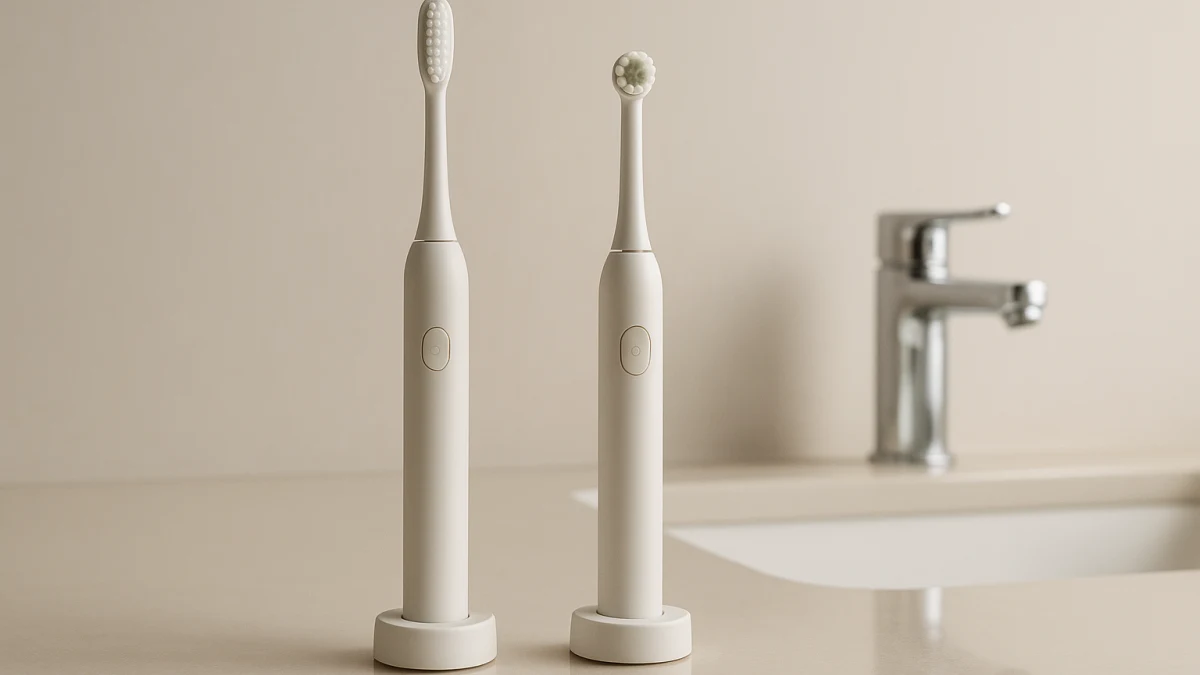
Sonic and oscillating-rotating electric toothbrushes are easy to compare badly. A normal electric-toothbrush listing can mix vibration-based sonic models, small round-head models, U-shaped mouthpiece designs, replacement heads, and claim-heavy product language in the same browsing path. This page compares the shopper-visible differences first: brush-head shape, brushing feel, technique expectations, noise and vibration comfort, feature overlap, and claim confidence.
Use it to choose between a vibration-based sonic feel and a compact round-head, tooth-by-tooth routine without treating motion labels as proof of better cleaning. Timers, rechargeable batteries, multiple modes, waterproof ratings, pressure sensors, soft bristles, travel cases, and included brush heads can appear in more than one lane, so the better starting question is how you want the brush to feel and fit in your mouth.
Choose by brush-head feel before motion-style claims
| If you want... | Better fit |
|---|---|
| A familiar elongated brush-head shape with high-frequency vibration or VPM-style wording | Sonic electric toothbrushes |
| A small round brush head and a tooth-by-tooth brushing feel | Oscillating-rotating electric toothbrushes |
| A hands-free, U-shaped, mouthpiece, or mouthguard-style design | Treat mouthpiece models as a boundary option, not the main sonic-vs-oscillating answer |
| To decide based on plaque removal, gum health, whitening, ADA Seal, or dentist-recommended wording | Pause and verify official support for the specific model or claim |
Also compare the ownership details that affect daily use: whether the handle is rechargeable, whether the mode choices are actually useful to you, whether a pressure sensor matters, whether the waterproof rating fits your bathroom routine, and whether travel accessories or included brush heads change the value of a specific model.
Head shape, vibration feel, and tooth-by-tooth control
Use these cues to separate the two main paths before looking at extras:
- Choose the sonic lane if the listing uses sonic, ultrasonic, vibration, or VPM language and the brush shape looks closer to a traditional elongated head.
- Choose the round-head lane if the product is built around a compact circular brush head, Oral-B-style wording, or Oral-B compatibility, especially if you like guiding the head tooth by tooth.
- Treat shared features as filters, not proof. Timers, modes, rechargeable power, waterproof ratings, pressure sensors, soft bristles, travel cases, and included brush heads can show up across both core lanes.
- Treat noise and vibration as comfort checks. The useful question is not which category is always quieter; it is whether the sensation seems comfortable enough for you to use consistently.
Do not turn VPM or rotating language into plaque-removal proof
Motion wording can help classify the shopping path, but it should not decide the dental-outcome question by itself. Sonic, ultrasonic, vibration, rotating, pulsing, and VPM terms describe how a product is presented, not a standalone guarantee of better plaque removal, gum-health improvement, whitening, ADA recognition, or dentist recommendation.
If a product page leans on those outcomes, look for model-level manufacturer support or official standards information before giving the claim weight. Without that support, use the claim as a prompt to verify, not as the reason to choose sonic over round-head or round-head over sonic.
Sonic electric toothbrushes for a vibration-based, familiar-head feel
A sonic electric toothbrush is the better starting point if you want a powered brush that still feels closer to a familiar elongated brush head. In this lane, look for visible wording such as sonic, ultrasonic, vibration, or VPM. Those terms are useful for identifying the type of brushing feel, especially when the catalog also shows comfort and convenience features like timers, rechargeable batteries, multiple modes, waterproof ratings, travel cases, soft bristles, smart-display or connectivity features, and pressure sensors.
This is the broadest product path here, so use the widget to narrow rather than to crown a universal winner. A higher vibration count or VPM figure may help you understand the feel of the brush, but it should not be treated as proof that the model removes more plaque, improves gums, whitens teeth, or has clinical superiority.
Read the products shown here as sonic-style candidates to inspect for comfort, charging setup, mode choices, brush-head softness, waterproof language, travel needs, and pressure-sensor availability. If you prefer a compact head that you deliberately guide around individual teeth, the round-head lane below is the more relevant comparison.
Oscillating-rotating electric toothbrushes for a small round-head routine
Choose this lane if the small round brush head is the main appeal. Round-head and Oral-B-style products are often shopped differently from elongated sonic models because the brushing experience feels more focused around individual teeth. The useful comparison is how the head shape, handle features, included brush heads, and charging setup fit your routine.
There is one important caution: round brush-head shape, Oral-B brand language, or Oral-B compatibility can be a strong shopper-facing cue, but it does not always prove the exact motion mechanism unless the product page says so at the model level. Compare rechargeable power, timers, multiple modes, pressure sensors, waterproof ratings, soft bristles, and included brush heads, but keep cleaning-performance claims separate from the shape decision.
Use these products to inspect the round-head side of the comparison, especially if you want a smaller head and a tooth-by-tooth feel. If the listing only implies the category through compatibility or head shape, check the product page for the exact motion wording before assuming it is confirmed oscillating-rotating.
U-shaped mouthpieces are a detour, not the third side of the comparison
U-shaped, U-type, mouthpiece, mouthguard-style, and hands-free designs belong in a separate mental bucket. They may use electric power, timers, rechargeable batteries, waterproof language, wireless charging, silicone bristles, travel accessories, or even sonic wording, but the form factor changes the technique enough that they should not be treated as a simple third answer to sonic versus oscillating.
Consider this route only if you intentionally want a mouthpiece-style design. If your real question is elongated sonic head versus small round head, decide between the two core lanes first.
U-shaped mouthpiece toothbrushes for shoppers intentionally leaving the main comparison
This is a limited exception lane for shoppers who are deliberately looking at hands-free or mouthpiece-style toothbrushes. Some listings may mention U-shaped design, U-type design, mouthpiece wording, whitening language, timers, rechargeable batteries, waterproof ratings, wireless charging, multiple modes, or travel accessories. Those details can help compare models, but they do not establish clinical cleaning results or equivalence to standard sonic or round-head routines.
Read this section narrowly: it is for form-factor exploration, not for settling the main sonic-vs-oscillating choice. If a U-shaped product also says sonic, still treat the mouthpiece design as a separate technique and verify any plaque, gum-health, whitening, cavity-protection, or clinical wording before relying on it.
Final listing checks for sonic, round-head, and mouthpiece models
Before choosing, make the product page answer these questions clearly:
- What is the actual brush form: elongated sonic-style head, compact round head, or U-shaped mouthpiece?
- Does the listing clearly say sonic, ultrasonic, vibration, VPM, round-head, Oral-B-style, U-shaped, U-type, mouthpiece, or hands-free, or is the classification only implied?
- Are you looking at a full electric toothbrush rather than a replacement head, refill, or refill-only product?
- What is included: handle, charging cable or dock, wireless charging if relevant, travel case, and extra brush heads?
- Which everyday features matter to you: timer, modes, rechargeable power, waterproof rating, soft bristles, pressure sensor, smart display, connectivity, or travel accessories?
- Are plaque removal, gum-health, whitening, ADA Seal, clinical, or dentist-recommended claims backed for that exact model by an official source?
The best fit is the brush-head shape and brushing feel you are most likely to use consistently. Let features refine the choice, verify model-level motion wording, and keep dental-outcome claims source-dependent rather than treating them as motion-style guarantees.