
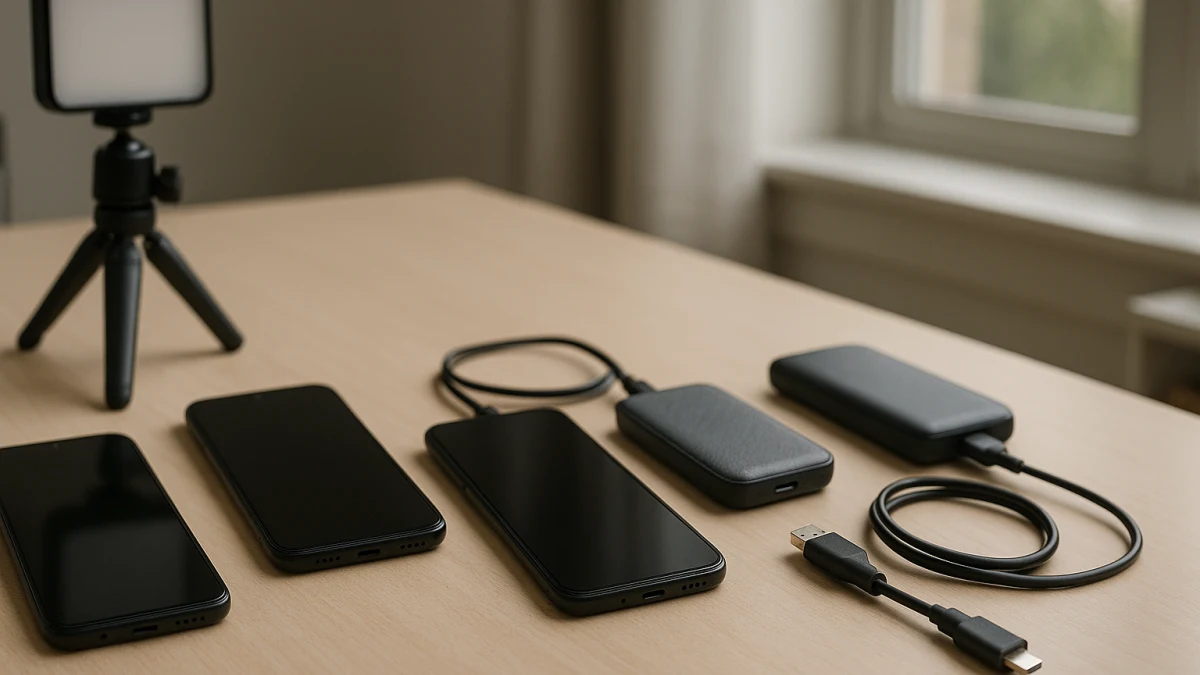
Use this collection to shortlist phones by the constraint most likely to interrupt your shoots: camera features, storage space, or battery capacity. A normal smartphone listing can mix megapixels, storage tiers, and battery size without telling you which one will actually limit a creator workflow.
The goal here is mistake avoidance. A camera-forward phone may not be the storage tier you need, a 512GB phone may not have the video modes you expect, and a 6000mAh phone may still be a practical endurance pick rather than a flagship video tool. Stay inside the phone category, then choose the lane that matches the way you record, review, edit, and transfer footage.
Choose the headroom your footage will exhaust first
| If this sounds like your workflow | Better fit |
|---|---|
| You care most about OIS, optical image stabilization, telephoto, optical zoom, HDR, professional mode, dual-view video, macro video, or front-camera quality. | Flagship camera smartphones |
| You record large files, keep drafts on the phone, or want visible 512GB, 512 GB, 512GB ROM, or 16GB + 512GB storage language. | High-storage smartphones for on-device editing |
| You spend long days recording, posting, navigating, and reviewing clips, and 6000mAh or 7000-class battery capacity matters most. | Battery-focused smartphones for long shooting days |
| You only post casual short clips and are mainly shopping by price. | Treat budget smartphones as an occasional-posting boundary, not the focus of this collection. |
As you compare, separate catalog language from real-world performance. OIS, HDR, telephoto, and professional modes help you shortlist camera phones, but they do not prove low-light quality, stabilization, thermal behavior, or sustained recording. Likewise, 512GB is storage headroom, not unlimited 4K, 8K, HDR, or log footage; 6000mAh and 7000-class batteries indicate capacity, not guaranteed all-day video recording. US shoppers should also confirm the exact regional model, storage tier, network compatibility, app services, and software limitations before checkout.
Which headroom fails first: camera, storage, or battery?
Start with the failure point that would stop your next shoot.
- Pick the camera lane first if the reason to upgrade is capture flexibility: OIS, optical image stabilization, HDR or Video HDR Vivid, telephoto, optical zoom, professional mode, dual-view video, macro video, or stronger front-camera specs.
- Pick the storage lane first if your pain is cleanup: clips, drafts, exports, and transfers piling up until the phone gets in the way.
- Pick the battery lane first if your phone has to survive long recording, posting, navigation, and review sessions before you can recharge.
This is not the same as ordinary phone-camera shopping. A high-resolution rear camera, a large battery, or a high storage number only matters here when it supports creator work.
Phone-only creator shopping, not a gear bundle
This page compares smartphones only. It does not cover dedicated cameras, gimbals, external microphones, lighting kits, editing apps, earbuds, laptops, or production tutorials. Those can matter to a creator setup, but including them here would blur the main decision: which phone gives you the right kind of headroom before you add anything else.
Specs that need verification before you trust the listing
Treat model-specific video claims as checkout checks, not assumptions. Before buying, open the product page and manufacturer specs for the exact model and storage tier. Confirm recording modes such as 4K, 8K, HDR video, or log video if they matter to you; confirm battery capacity and charging details; and look for current hands-on testing when you care about low-light quality, overheating, stabilization, battery drain, or sustained recording.
Start with camera-first phones if video modes drive the buy
Use this lane when camera and video features are the main reason to upgrade. The products shown here are useful to compare when listings mention creator-facing camera language such as OIS, optical image stabilization, Video HDR or HDR Vivid, telephoto, optical zoom, professional mode, dual-view video, macro video, strong front cameras, or multi-camera capture.
Do not reduce this lane to megapixels. A 50MP, 60MP, or higher-resolution camera can be a helpful catalog cue, but creator video quality also depends on processing, stabilization, low-light handling, heat, and recording limits that need model-specific verification.
Read this widget as a camera-feature shortlist, not a ranking of the best video phones. If a product lacks the storage tier you need, move to the 512GB lane. If the shoot day is the bigger constraint than camera modes, compare the large-battery phones instead.
Camera language is a shortlist, not a low-light verdict
OIS, HDR, optical zoom, telephoto, dual-view video, macro video, and professional mode are worth noticing because they point to phones designed with more camera flexibility. They still do not prove best-in-class stabilization, low-light results, 4K or 8K behavior, app support, US carrier readiness, or sustained recording performance. Verify the specific model before treating any camera term as a real-world video promise.
Move to 512GB listings when clips and edits live on the phone
Choose this lane when storage cleanup is the recurring problem. Visible 512GB, 512 GB, 512GB ROM, 512GB internal storage, or 16GB + 512GB language is useful for creators who keep clips, drafts, exports, and transfer files on the device instead of clearing space every day.
Some listings may also mention high RAM, UFS storage, 4K recording, or fast charging, but those are secondary here. The point of this lane is storage headroom first; camera features and battery claims still need their own review.
Use the products shown here to verify exact capacity before judging anything else. A 512GB phone can be a better fit than a camera-forward model if your workflow fails from running out of space, but it is not automatically the best camera phone or the strongest sustained editing device.
512GB is headroom, not unlimited footage
512GB-class storage helps, especially if you keep multiple takes, drafts, exports, and social edits on the phone. It is not a guarantee that every long-form, 4K, 8K, HDR, or log workflow will fit comfortably. File size varies by resolution, frame rate, codec, bitrate, and app settings, so match the storage tier to how you actually record.
Use large-battery phones when the shoot day is the constraint
This lane is for creators who care most about battery capacity during long days of recording, posting, navigating, hotspot use, and clip review. Look here when listings visibly advertise 6000mAh, 6000 mAh, 7000, or 7000mAh battery language.
Expect this path to be more endurance-oriented than flagship-video-oriented. The relevant products commonly pair larger batteries with 128GB or 256GB storage and more ordinary camera specs such as 48MP, 50MP, 13MP, 5MP, or 8MP, so do not assume advanced stabilization, telephoto capture, HDR video, or 512GB-class editing space.
Compare these phones as battery-capacity candidates. A larger mAh number can give useful headroom, but actual recording time depends on resolution, screen brightness, network use, processor load, temperature, charging behavior, and thermal performance. If you need advanced video modes first, return to the camera lane; if storage is the daily blocker, use the 512GB lane.
US checkout checks for creator phones
Before buying from the US, confirm:
- The exact storage tier shown at checkout, especially if the listing has multiple variants.
- Network compatibility and bands for your carrier, not just a general unlocked or 5G label.
- App services and regional software limitations for the model being sold.
- Manufacturer video specs for the specific device, including any 4K, 8K, HDR, log, stabilization, or professional-mode details that matter to your workflow.
- Current hands-on recording and battery testing if overheating, long takes, low-light footage, or sustained stabilization are deal breakers.
Where budget posting phones fit without taking over
Budget smartphones can be fine for occasional short clips, quick stories, and casual posting. They become the wrong yardstick when you are shopping for creator headroom. If price is the main filter, decide which compromises you can accept; if camera modes, 512GB-class storage, or 6000mAh and 7000-class battery capacity are the real reason to upgrade, use the lanes above instead.
Choose the phone by the constraint that would interrupt your next shoot first. Then verify the exact storage tier, manufacturer video specs, US compatibility, and current real-world recording or battery results before purchase.