
Smart water shutoff shopping gets confusing because a normal category page can mix automatic valves, app-controlled valve controllers, standalone leak sensors, manual plumbing valves, and adjacent irrigation gear. This collection narrows the decision to shutoff-capable whole-home leak response: products that may close a home water supply valve, not just notify you that water is present.
Use the products shown here as candidates, then verify the real fit. The important checks are not just whether something is “smart,” but whether it can close the line, how it detects or responds to a leak event, which pipe or valve sizes it fits, what power and wireless connection it needs, where it can be installed, and which potable-water or local compliance claims are actually documented.
First decide whether the product can close the water line
| If this is your situation | Better fit |
|---|---|
| You want more than an alert when a leak detector, abnormal flow signal, or monitoring feature is triggered. | Automatic whole-home shut off valves |
| The listing only describes a standalone leak sensor or flood alarm with notifications. | Exclude it unless it is sold with or as part of a shutoff valve system. |
| You are replacing a basic manual main-line shutoff and do not need Wi-Fi, app control, or automatic closure. | Use manual valves only as a comparison point, not as the core product path on this page. |
| Your main shutoff area lacks compatible power, wireless coverage, or a clear pipe-size match. | Verify installation requirements before treating any smart shutoff valve as a fit. |
Read every listing through the same comparison lens: shutoff behavior, leak-detection or monitoring method, pipe and connection fit, power and backup expectations, connectivity and app requirements, installation location, monitored plumbing scope, and any compliance language that needs proof.
Can it actually close the main line?
A smart water product belongs in this search only if the valve or controller can close a supply valve as part of the response. Look for wording that clearly describes automatic shutoff, remote app closure, a smart water valve, a water monitor with automatic shutoff, or a controller that actuates an existing shutoff valve.
Useful decision cues include:
- Shutoff action: Does it close automatically, close through app control, support scheduled open/close, or only operate manually?
- Trigger method: Does it use included leak detectors, companion sensors, flow or pressure monitoring, abnormal-flow logic, or only app alerts?
- Main-line fit: Check size, connection type and pipe material separately. DN15, DN20 and DN25 are nominal size designations, not measurements of a pipe’s actual diameter. NPT identifies a tapered pipe thread; PEX means cross-linked polyethylene pipe, while copper is another pipe material. For an inline valve, match the stated size and connection; for an external actuator, check compatibility with the existing valve handle and mounting clamp.
- Power: Does it need DC power, a nearby outlet, a power adapter, or a stated backup option?
- Connectivity: Does it rely on Wi-Fi 2.4 GHz, Zigbee, an app, voice-assistant integration, or a hub that must reach the shutoff location?
- Plumbing scope: Is it intended for the home’s main water supply, or only for a smaller appliance, faucet, irrigation, or accessory use?
Scheduled open/close and app control can be useful, but they are not the same as proven leak detection. If a listing does not explain what causes the valve to close during a leak event, treat that as a question to answer before checkout.
Lookalikes to keep out of the shutoff search
Some products sound related but solve a different problem. Keep them out of the core comparison unless they are sold with, or clearly work as part of, a shutoff valve system.
- Standalone leak sensors and flood alarms: Helpful for alerts, but not enough if there is no valve closure.
- Sump-pump probes and water alarms: Often monitor one location rather than controlling the main supply.
- Sprinkler valves, irrigation controllers, and faucet timers: Connected water control, but not whole-home main-line leak response.
- Appliance-only shutoffs: Useful around a washer, water heater, or fixture, but not a substitute for main-line control.
- Basic manual shutoff valves: Important plumbing hardware, but the response depends on someone being present to turn the handle.
Smart shutoff valves for main-line leak response
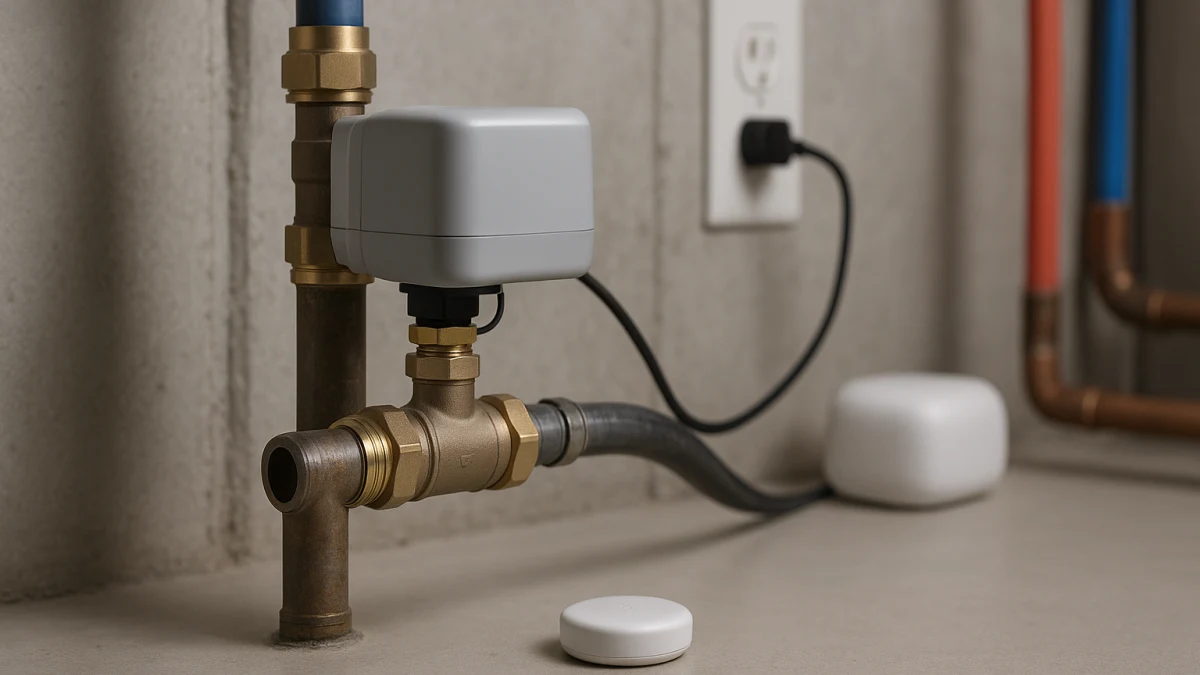
This is the core shopping lane: smart water shutoff valves, smart water valves, water monitors with automatic shutoff, and connected shutoff controllers intended to close a water supply valve. The products shown here are useful to compare when you want a system that can do more than send a phone notification.
As you compare, separate the detection method from the shutoff hardware. Some options may be sold with included leak detectors. Others may emphasize Wi-Fi 2.4 GHz, Zigbee, app remote control, voice-assistant support, or scheduled open/close. Also check concrete installation details such as DN15, DN20, DN25, pipe size, threaded connections, adapters, pressure ranges, operating temperatures, DC power requirements, and included clamps or components.
Read the products shown as a short list of shutoff-capable candidates, not as a guarantee that every model has the same monitoring intelligence or installation path. A smart water valve may be a fit if its size, connection type, power, wireless coverage, and shutoff behavior match your home. A manual valve or alert-only sensor is the better comparison point only if you do not need connected closure.
Pipe, power, Wi-Fi, and potable-water checks before checkout
Before choosing a smart shutoff valve, confirm the parts of the listing that determine whether it can actually work at your main shutoff location.
- Shutoff method: Confirm whether the product closes an inline valve, turns an existing valve handle, or requires another component to perform the shutoff.
- Detection setup: Check whether leak detectors are included, sold separately, or replaced by monitoring features such as abnormal-flow, flow, or pressure detection.
- Pipe size, connection and material: Match the nominal size, thread or adapter, and compatible pipe material to the installation point. For an external actuator, check the valve handle and mounting requirements instead.
- Installation location: Make sure the product is intended for the main water supply area you plan to control, not only an appliance, fixture, or irrigation branch.
- Power access: Verify DC power, adapter placement, outlet access, and any stated backup-power claim before assuming it will operate during an outage.
- Wireless reach: Confirm Wi-Fi 2.4 GHz, Zigbee, hub, app, or voice-assistant requirements where the valve will be installed, not just near the router.
- Operating limits: Review pressure range and operating temperature details when provided, especially for basements, garages, crawl spaces, or utility areas.
- Included parts: Check for sensors, clamps, adapters, power supplies, and mounting hardware instead of assuming they are in the box.
Claims that need proof, not product-page optimism
Some claims matter too much to infer from a smart-home label. Treat them as verification steps, especially for a main-line potable-water installation.
- Potable-water and lead-free language: Do not assume NSF/ANSI 61, NSF/ANSI 372, UPC, cUPC, or other compliance from the words “smart water valve.” Look for manufacturer documentation or an authoritative listing if those claims matter for your installation.
- Permits and plumbing rules: Local code, inspection, backflow, and licensed-plumber requirements can vary. Check the rules for your jurisdiction or ask a qualified plumber before cutting into a main supply line.
- Insurance language: A smart shutoff system may be relevant to a homeowner’s policy discussion, but discounts or approvals must come from the insurer, not from a generic product category claim.
- Damage prevention: Automatic shutoff can reduce response time, but no listing should be treated as a promise that all water damage will be prevented.
- Feature assumptions: Battery backup, professional-installation suitability, whole-home flow analytics, and pressure-based leak detection should only count if the specific product page documents them.
Choose the shutoff-capable product only after the boring fit checks are satisfied: how it responds, what it closes, what it fits, how it is powered and connected, and which plumbing or compliance claims are backed by documentation.