
Sleep tracking sounds like a sensor problem, but the buying decision is mostly about friction. A wearable cannot build a useful trend if it spends half the week on a charger or gets removed at 3 a.m. because it pinches, traps sweat, or feels too bulky.
Smart rings, fitness trackers, and smartwatches can all estimate sleep, but they make different tradeoffs:
- Choose a smart ring when you want no display, dislike sleeping in a wristband, and are comfortable checking every result in a phone app.
- Choose a fitness tracker when you want a light wrist device, a small screen, vibrating alarms, and multi-day battery life without the size of a full watch.
- Choose a smartwatch when notifications, workouts, navigation, payments, and apps matter during the day—and you already have a reliable time to recharge it.
Understand what the sleep numbers can and cannot tell you
Most finger- and wrist-worn trackers do not measure sleep the way a clinical sleep study does. They use combinations of movement, optical heart-rate signals, and algorithms to estimate when you fell asleep, when you woke up, and how your night was divided into light, deep, and REM sleep. Google’s explanation of wrist-based sleep staging is unusually clear about that difference.
That makes sleep stages better for spotting broad patterns than judging a single night minute by minute. A sudden drop in “deep sleep” may reflect a real change, a loose sensor, an unusual sleeping position, or an algorithmic error. Total sleep time, bedtime consistency, wake time, resting heart rate, and longer-term changes in HRV are often easier to interpret. Skin temperature and blood-oxygen readings can add context, but unless the exact feature is authorized for medical use, treat them as wellness trends rather than diagnoses.
App design matters as much as the sensor list. Before buying, check which metrics are included without a subscription, how much history the app retains, whether you can correct a bad sleep log, whether your phone and country are fully supported, and whether you can export or delete your data. A free trial is temporary; the useful comparison is what remains after it ends.
Do not buy a wearable to diagnose sleep apnea
“Sleep apnea monitoring” on a product listing is not proof that the device can diagnose or rule out a sleep disorder. The wording may describe a manufacturer’s wellness algorithm, while a regulated notification feature has a specific model, software version, region, age range, and intended use. Even an authorized notification can miss people and is not the same as a diagnosis.
The American Academy of Sleep Medicine’s position statement says consumer sleep technology should not be used to diagnose or treat sleep disorders without appropriate validation. If someone notices that you snore loudly, gasp, or stop breathing during sleep—or you have persistent daytime sleepiness—the National Heart, Lung, and Blood Institute recommends discussing it with a healthcare provider. A sleep study, not a shopping-page claim, is what establishes a diagnosis.
Smart Rings: Low-Profile at Night, but Fit Is Everything
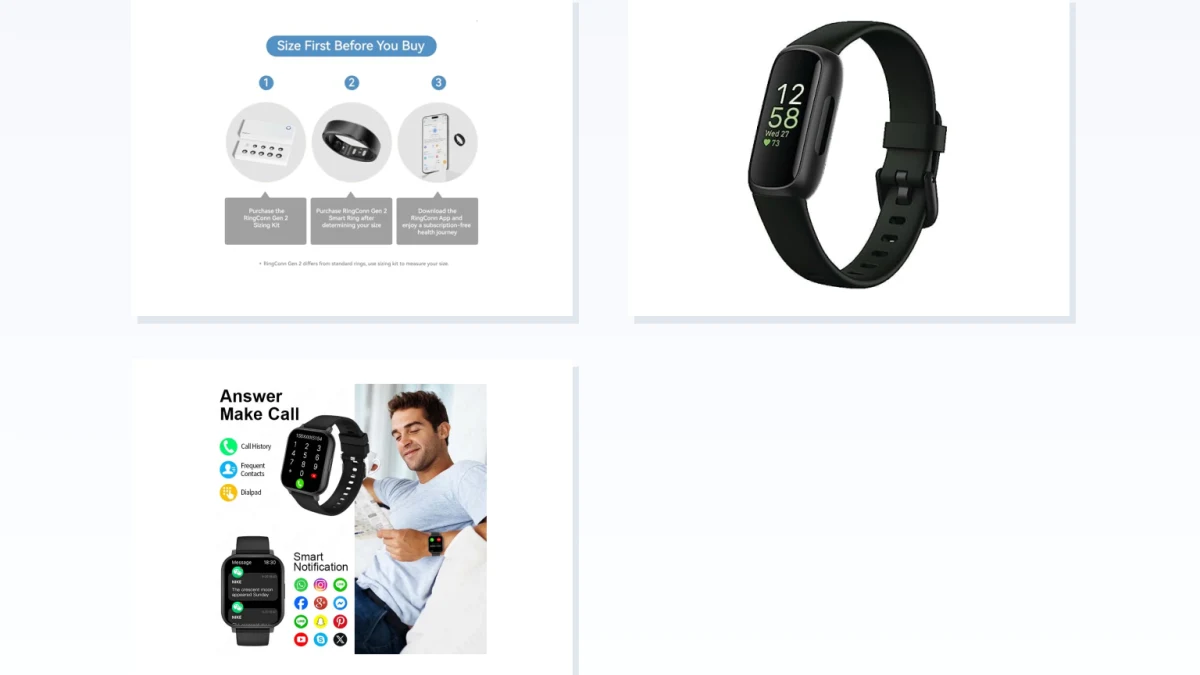
A smart ring is the most discreet option when you do not want a glowing screen or a strap around your wrist. It can be easy to forget once you are asleep, but only if the fit is right. Many smart-ring brands use their own sizing rather than standard jewelry sizes, and finger size changes with temperature and time of day. Use the brand’s sizing kit for a full day and night before choosing. A ring that rotates freely can lose consistent sensor contact; one that feels tight in the morning is unlikely to become more comfortable after a week.
The lack of a display is both the attraction and the compromise. Sleep scores, stage charts, HRV, temperature, and blood-oxygen trends live in the phone app. Many sleep rings also rely on the phone for alarms, so verify whether the exact model has its own vibration motor if silent wake-up matters to you.
Battery life is usually a strong reason to consider a ring, but compare the exact operating mode rather than the largest number on the product page. RingConn, for example, advertises 10 to 12 days for the Gen 2 and no required subscription, while also noting that its obstructive-sleep-apnea mode can increase power use. Those are manufacturer claims for one model, not a category-wide promise.
Prioritize sizing range, thickness, weight, charging method, app cost, and phone compatibility. Check whether a charging case is included and whether a replacement dock is sold separately; a proprietary charger left at home can still break a travel routine. Also consider when you will remove the ring. Weight training, tool use, and other activities that involve gripping hard surfaces may be uncomfortable and can scratch the ring, even if overnight tracking is your main goal.
Fitness Trackers: The Best Balance for Many Sleepers
A slim fitness tracker is often the easiest compromise between comfort, battery life, and immediate feedback. It keeps a small display for the time, alarms, and basic morning results, but usually weighs less and sits flatter than a full smartwatch. That can make it easier to wear continuously, which matters more for sleep trends than an extra metric you collect only three nights a week.
Do not assume every narrow band feels the same. Strap material, buckle position, case thickness, and how tightly the optical sensor must sit against the skin can matter more in bed than the screen size. The band should stay secure enough to maintain contact without leaving deep marks or trapping excessive moisture. A replaceable, soft strap can be more valuable than another workout mode.
Automatic sleep detection and vibrating alarms are common, not universal. Fitbit Inspire 3 is a useful example: Google lists sleep score, sleeping heart rate, and light, deep, and REM stages as device features, while Google Health Premium adds deeper insights and coaching. Promotional trial lengths change, so compare the permanent free experience rather than the bundle advertised at checkout.
Battery claims also need context. Features such as an always-on display and overnight blood-oxygen tracking can shorten runtime substantially. Compare normal use with your preferred settings, not “standby” time, and check whether a full charge takes long enough to interfere with the only charging window you actually have.
Look for the exact sleep data available on the wrist and in the free app, support for a smart alarm, the ability to edit incorrectly detected sleep, and the cost of replacement straps and chargers. If a low-cost tracker also advertises cuffless blood-pressure readings, evaluate that claim separately and verify the regulatory status of the exact model. It should not outweigh comfort, reliable sleep logging, and a usable app.
Smartwatches: More Daytime Value, More Charging Friction
A smartwatch makes sense when sleep tracking is one part of a much larger job. It offers the richest display and can combine workouts, notifications, calls, maps, payments, music, and third-party apps with overnight data. A fitness band may handle some of those tasks, but a watch gives them more screen space and more capable controls.
The tradeoff is physical and logistical. A larger case can press against the wrist when you sleep with your hand under a pillow, and a bright display or notification vibration can become an unnecessary interruption. Check for a sleep mode that dims the screen and silences alerts, and consider a softer night strap if the standard band is stiff or bulky.
Battery life varies too widely to judge smartwatches as one group. The Galaxy Watch6 Classic, for example, is rated by Samsung for up to 40 hours with the always-on display off and up to 30 hours with it on. That can cover overnight tracking, but it still requires a dependable daily charging window. Samsung also advertises Sleep Coaching, which may be useful if you want guided habits rather than only charts, but it does not remove the need to wear and charge the watch consistently.
Compare battery estimates with the always-on display, GPS, LTE, continuous health features, and overnight tracking enabled. Ignore a long standby figure if it assumes most features are inactive. Fast charging can matter more than maximum runtime: a watch that gains enough power during a shower or breakfast may fit your routine better than a longer-lasting model with a slow, proprietary charger.
Phone compatibility and regional limits deserve the same attention. Some health features require a particular operating system, phone brand, app, account, or country. Confirm those requirements for the exact watch before paying for sensors that may not work with your setup.
Five checks that prevent the most common buying mistakes
- Wear the form factor, not the feature list. Use a ring sizing kit or try a similarly sized watch or band overnight before committing.
- Plan the charging window. Decide whether charging happens during a shower, at a desk, or while watching television—never merely “when the battery gets low.”
- Compare the permanent app. Separate core sleep history and stage estimates from paid coaching, reports, and temporary trials.
- Check the configured battery estimate. Always-on displays, SpO2, GPS, LTE, and frequent notifications can turn an impressive headline into a much shorter real routine.
- Treat medical-sounding labels carefully. Verify the exact feature and regulatory status, and use concerning symptoms or alerts as a reason to seek proper medical evaluation rather than as a verdict from the wearable.
The best overnight tracker is not the one with the longest sensor list. It is the one you can wear comfortably, keep charged without thinking about bedtime, and understand well enough to notice meaningful trends. A ring minimizes screen and wrist bulk, a fitness tracker balances comfort with at-a-glance feedback, and a smartwatch earns its extra size only when its daytime features are worth the charging habit.