
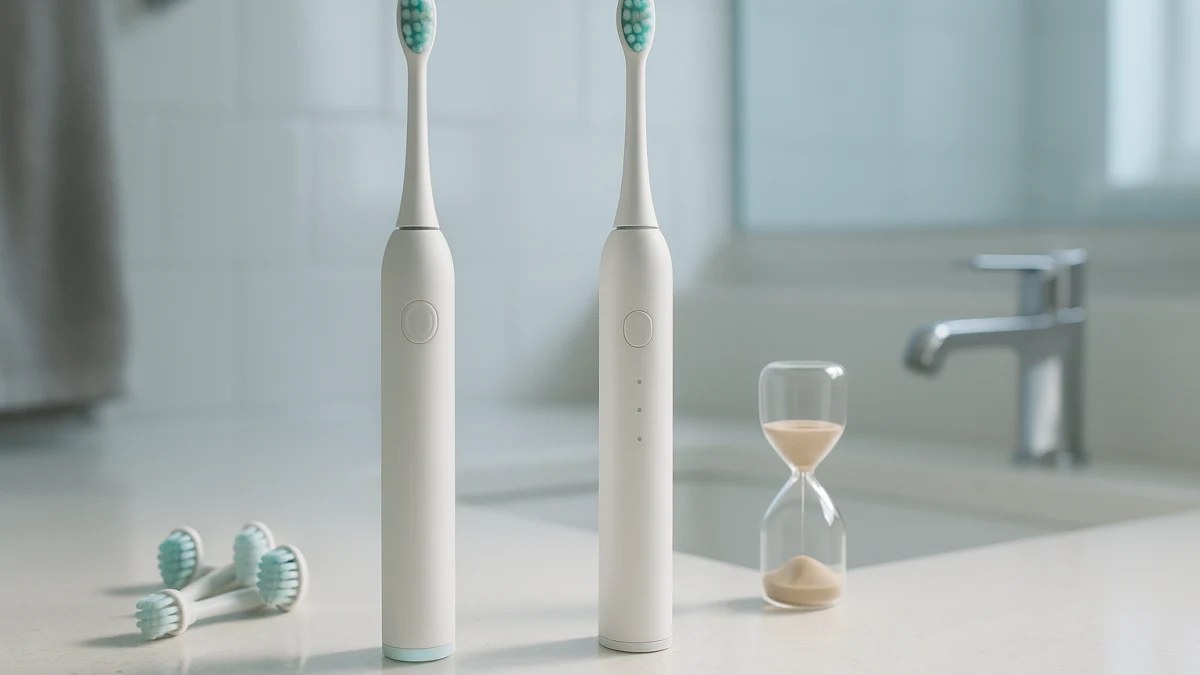
If brushing feels harsh, the first question is not which electric toothbrush has the longest feature list. It is what feels wrong: are you pushing too hard with your hand, or does the vibration feel too intense even when you brush lightly? This collection separates those two comfort problems before showing products.
A standard electric toothbrush listing can mix pressure sensors, sensitive modes, timers, app coaching, and brush-head wording in one place. Here, the products stay inside electric toothbrushes with pressure-feedback features or gentle, sensitive, gum-care, soft, or adjustable-intensity settings, while standalone heads, water flossers, manual brushes, and app-first coaching stay secondary.
Start with what feels wrong while brushing
| Your brushing cue | Better first feature to inspect | What not to assume |
|---|---|---|
| You tend to push until the brush feels scrubby, loud, or forceful. | Pressure sensor, pressure control, pressure alert, gum pressure control, visible indicator, pulse change, or automatic power reduction language. | A pressure alert does not automatically mean the brush will feel gentle in every mode. |
| The vibration or brushing feel seems too intense even when you are not pressing hard. | Sensitive, soft, gum care, care, gentle, or adjustable-intensity settings. | A soft-sounding mode name is not a standardized medical claim. |
| You want comfort controls plus routine prompts. | Look in either lane for 2-minute timers, 30-second interval alerts, quadrant reminders, and soft or gentle-care brush-head compatibility. | A timer helps structure the routine, but it does not prove lower intensity. |
| You mainly want an app to coach brushing habits. | Treat app-led pressure tracking as adjacent to this page. | App coaching is not the main buying path here. |
Across both lanes, compare five things separately: pressing-force feedback, softer brushing feel, brush-head comfort compatibility, routine timing aids, and boundary signals such as apps, smart screens, flossers, manual brushes, or replacement heads.
Pressure feedback or softer feel: choose the first feature to inspect
Use pressure feedback as the first filter when the problem is excess hand force. The useful listing terms are concrete: pressure sensor, pressure control, pressure alert, gum pressure control, visible pressure indicator, pulse change, alert, or automatic power reduction.
Use softer-feel settings as the first filter when the brush sensation itself feels too strong. The terms to look for are sensitive, soft, gum care, care, gentle, or multiple intensity settings. A single brush can include both types of features, but they answer different questions.
Comfort features are not gum-disease treatment claims
This page uses sensitive-gum language only to describe comfort-oriented shopping cues. Pressure sensors, sensitive modes, soft modes, gum-care modes, timers, and soft brush heads should not be read as treatment for tooth sensitivity, gum disease, gum recession, or bleeding gums.
If a product page makes a health or dental outcome claim, read that claim on its own terms. For this collection, the safer comparison is feature-based: how the brush alerts you, how many gentler settings it offers, and what brush heads it supports.
Keep the search out of heads, flossers, and app-first coaching
Replacement brush heads, water flossers, manual toothbrushes, kids’ brushes, smart-screen models, and app-first coaching products can appear near the same search terms. They are not the main scope here.
The products below are meant to help compare electric toothbrush handles by comfort controls: pressure feedback in the first lane, then gentle modes or adjustable intensity in the second lane.
Pressure sensors: feedback when you push too hard
Start here if you want the brush to warn you when your hand pressure climbs. Listings in this lane use terms such as pressure sensor, pressure control, pressure alert, or gum pressure control. Some describe how the feedback appears, such as a visible indicator, pulse change, alert, or automatic power reduction.
The products shown here are useful to compare by the exact alert behavior, not just by whether the words pressure sensor appear. Also check whether the brush includes companion comfort features such as gentle or super-sensitive modes, a 2-minute timer, 30-second interval alerts, or compatibility with soft or gentle-care brush heads.
Read this widget as a shortlist for the pressing-too-hard problem. If your main complaint is harsh vibration even with a light touch, do not stop at the pressure feature; move to the next lane and compare sensitive, soft, gum-care, or adjustable-intensity settings as well.
After pressure sensors: still check the softer-feel controls
A pressure sensor is feedback, not a full comfort setup. Before choosing from the pressure-sensing lane, check:
- Whether the brush also has a gentle, sensitive, soft, gum-care, or super-sensitive mode.
- Whether the pressure response is described clearly, such as a visible alert, pulse change, or automatic power reduction.
- Whether the included or compatible heads mention soft bristles, rounded bristles, cushioned gum-care heads, or gentle-care compatibility.
- Whether routine aids such as 2-minute timers and 30-second interval alerts are included, without treating those aids as proof of softness.
Gentle modes and intensity levels for a softer brushing feel
Choose this lane when the brush feels too intense even when you are not pushing hard. Listings here emphasize sensitive, soft, gum care, care, gentle, or adjustable-intensity settings rather than pressure-sensor-led positioning.
Mode names are not standardized, so compare the exact options. A product with multiple intensity settings gives you a different kind of control than a product with one named sensitive mode. Also inspect the brush-head details: soft bristles, rounded bristles, cushioned gum-care heads, or soft-head compatibility can affect the practical setup.
Use these products to compare gentler-feel language, timer behavior, 30-second quadrant reminders, and included or compatible heads. If you know you press too hard, this lane should not replace pressure alerts; go back and verify pressure sensor, pressure alert, or gum pressure control language too.
Verify the exact gentle-brushing spec before choosing
Before you buy, check the product page for the details that actually change the decision:
- What kind of pressure feedback is listed: sensor, alert, visible indicator, pulse change, gum pressure control, or automatic power reduction.
- Which softer-feel modes are named: sensitive, soft, gum care, care, gentle, or similar.
- Whether there are multiple intensity levels or only one softer-sounding mode.
- Whether the timer is a 2-minute timer, a 30-second interval reminder, a quadrant reminder, or some combination.
- Which brush heads are included or compatible, especially soft bristles, rounded bristles, cushioned gum-care heads, or gentle-care heads.
- Whether the item is the electric toothbrush handle you want, not a standalone replacement-head pack, water flosser, manual brush, or app-first coaching product.
Timer-only and app-coached brushes stay secondary
A basic timed electric toothbrush may be enough for a simple routine, but timer-only language does not tell you whether the brush gives pressure feedback or offers a softer brushing feel. Treat timers and quadrant reminders as supporting checks.
App-coached pressure tracking can be useful for shoppers who want habit feedback, but it is not a co-equal lane on this page. If the app is the main reason you are shopping, compare app-led models separately. For this collection, the better path is still to match the discomfort first: pressure feedback for pushing too hard, gentle or adjustable modes for harsh brushing feel, then brush-head compatibility and timing aids as supporting details.