
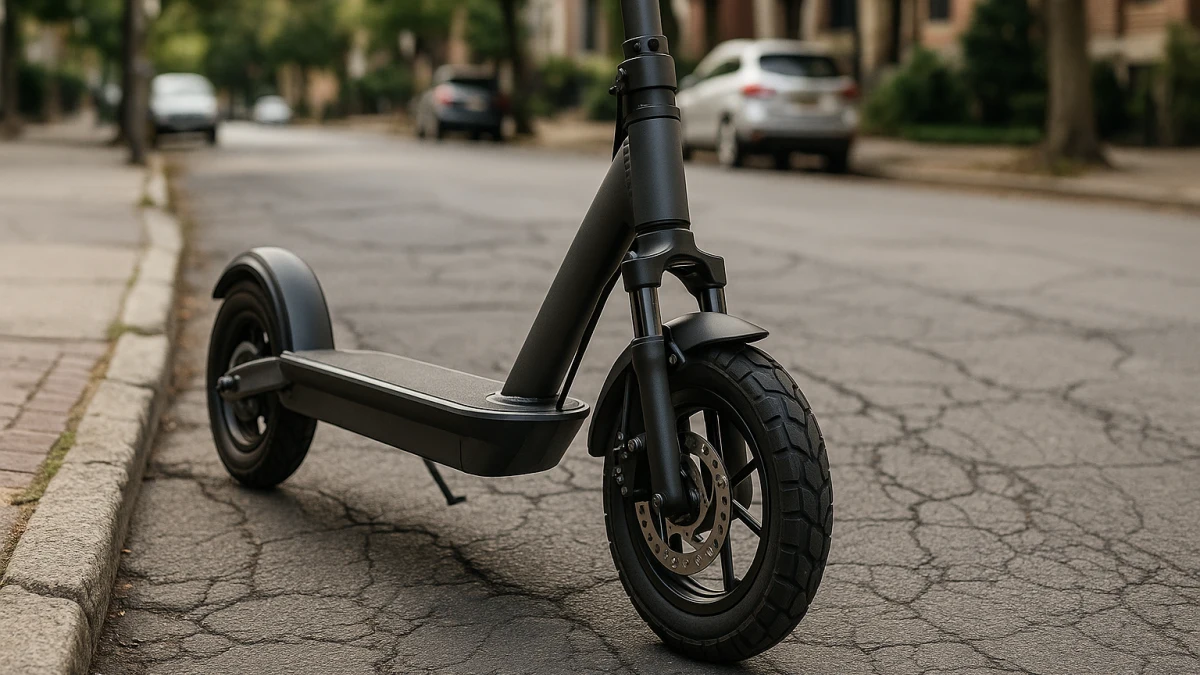
A normal electric scooter category page can blur together compact commuters, speed-focused models, off-road wording, and lookalike products that do not solve the same riding problem. This collection is narrower: it interprets suspension, tire type, wheel size, deck stability, braking setup, and folding rigidity as rough-pavement buying clues for cracked city surfaces.
Use this page when your main concern is control and comfort on patched asphalt, brick paths, uneven sidewalks, and rough urban streets. Gravel and dirt are treated as edge cases, not as a reason to buy for true off-road use. Larger tires, wider decks, stronger frames, and dual suspension can help stability, but they may also make a scooter heavier, bulkier, and less pleasant to carry or store.
Start with pavement problems, not off-road promises
| Your riding need | Better fit | What to compare first |
|---|---|---|
| Daily riding over cracked pavement, patched asphalt, brick paths, or uneven sidewalks | Urban rough-road electric scooters | Front or dual suspension, pneumatic tires, 10-inch or larger wheels, dual braking, deck stability, and folding rigidity |
| Fewer flat-tire worries but still some bump control | Scooters with solid or honeycomb tires only when the rest of the hardware supports rough pavement | Wheel size, suspension type, deck width, frame stability, and brake setup |
| Occasional crossings over light gravel or packed dirt | A narrow boundary pick with both non-pavement wording and supporting hardware | Pneumatic tires, front or dual suspension, air suspension, 10- to 11-inch wheels, and stronger braking |
| Riding on sidewalks, parks, trails, public paths, or roads | A scooter that fits your local rules | Check official city, state, campus, park, or path rules before assuming access |
Across all of these situations, do not let speed or motor power outrank the basics. Suspension presence and type, tire construction and size, deck and frame stability, braking confidence, folded portability, and the pavement-versus-non-pavement boundary matter more for this page than broad comfort claims.
Cracked pavement is the target; trails are the boundary
This page is built for imperfect paved surfaces: cracked pavement, patched asphalt, brick paths, rough city streets, and uneven sidewalks where a small-wheeled, rigid commuter scooter may feel nervous. It is not a powersports, dirt-bike, ATV, hoverboard, seated mobility scooter, or full trail-use guide.
The important boundary is light, occasional non-pavement use. A product mentioning off-road, all-terrain, gravel, or dirt does not automatically belong in your decision. That wording only matters here when it is paired with relevant scooter hardware such as pneumatic tires, front or dual suspension, larger wheels, or a braking setup that looks appropriate for uneven surfaces.
The rough-road spec stack: suspension, tires, deck, brakes
Look at the hardware in layers rather than choosing from a single headline claim:
- Suspension: Front suspension, rear suspension, and dual suspension are direct clues for repeated cracks, seams, and brick paths. Dual suspension is worth extra attention when rough pavement is a daily issue.
- Tires and wheel size: Pneumatic tires can add cushioning but bring tire upkeep. Solid or honeycomb tires can reduce flat-tire worries, but ride comfort then depends more on suspension, wheel size, and frame setup. Ten-inch or larger wheels, 10.5-inch pneumatic tires, 12-inch dual-suspension builds, and 14-inch solid-wheel designs are all different tradeoffs.
- Deck and frame stability: Deck width, handlebar steadiness, a sturdier frame, and a rigid folding mechanism affect control when the surface is uneven. A soft ride is not enough if the scooter feels vague underfoot.
- Braking: Dual braking systems and the overall brake setup matter because rough pavement can make controlled slowing feel more important than top speed.
- Portability: Larger tires, suspension hardware, wider decks, and heavier frames can improve stability but make stairs, car trunks, apartments, and office storage harder.
Best electric scooters for rough urban pavement
Use this section as the main comparison set if most of your route is paved but imperfect. The products shown here are relevant because their product information includes rough-city hardware patterns such as front suspension, dual suspension, pneumatic tires, 10-inch or larger wheels, dual braking, or sturdier commuter-oriented builds.
A few tradeoffs are worth reading carefully. A scooter with 10.5-inch pneumatic tires and dual suspension points more directly at repeated pavement cracks than a basic compact commuter. A model with 10-inch solid wheels or a larger 14-inch solid-wheel design may reduce flat-tire concerns, but you should look harder at suspension, deck stability, and braking before expecting comfort. Wider decks and stronger frames can improve control, yet they often come with extra folded bulk and carry weight.
Read these products as a spec comparison, not as a speed ranking or proof of hands-on ride testing. On each product page, confirm the exact suspension type, tire construction, wheel size, brake setup, folded dimensions, weight, load limit, and stated use conditions. If your route is mainly cracked pavement or patched asphalt, this is the primary lane; if you are mostly thinking about gravel or dirt, use the next section only as a limited boundary check.
When pavement ends, product wording is not permission
Manufacturer wording can describe intended use, but it does not decide where you are allowed to ride in the US. Sidewalk, road, public-path, park, campus, and trail rules can vary by city, state, property owner, and park authority, so verify official local rules before treating any scooter as allowed in a specific place.
Off-road and all-terrain language also should not be read as a durability guarantee. It does not by itself prove ground clearance, waterproofing, long-term frame strength, or suitability for loose gravel, mud, sand, rocks, steep hills, jumps, or extreme trails.
Boundary picks for occasional light gravel or packed dirt
This is a secondary lane for riders who mostly stay on pavement but sometimes cross a short stretch of light gravel or packed dirt. Treat a product as relevant only when non-pavement wording such as off-road, all-terrain, gravel, or dirt appears alongside supporting hardware like pneumatic tires, front or dual suspension, air suspension, 10- to 11-inch wheels, off-road tires, or stronger braking.
Use these products cautiously. Pneumatic tires, suspension type, tire size, brake setup, frame material, deck space, and total weight matter more here than speed claims. If your real need is cracked city pavement, the main rough-urban section remains the better reference point. If your real need is loose gravel, mud, rocks, jumps, or trail riding, this collection is not trying to solve that problem.
Final check: carry weight, tire upkeep, brakes, and local rules
Before choosing, check the product page for the practical details that can change ownership more than the headline specs:
- Carry and storage: Confirm folded size, total weight, handlebar fold, latch design, and whether you can manage stairs, transit, car storage, or apartment storage.
- Tire upkeep: Pneumatic tires can help with roughness but require pressure checks and flat-related maintenance. Solid or honeycomb tires reduce that concern, but make suspension and wheel size more important.
- Brakes: Look for the actual braking setup, not just speed or motor power. Dual braking or clearly described front/rear braking can matter on rough pavement.
- Deck and folding rigidity: Check deck dimensions, frame description, handlebar stability, and folding-mechanism design if you ride over brick paths or uneven surfaces often.
- Load and use limits: Verify the listed rider weight limit and any manufacturer use conditions before assuming the scooter fits your route.
- Weather and water exposure: Check the stated water-resistance or wet-use guidance; rough urban riding often includes puddles, seams, and street debris.
- Local access rules: Confirm official rules for sidewalks, roads, parks, trails, campuses, and public paths in your area.
Choose based on your actual surface mix: the best fit is the scooter with the clearest suspension, tire, deck, brake, and portability match for rough pavement. Treat gravel, trail, and legal-access claims as items to verify, not as promises.