
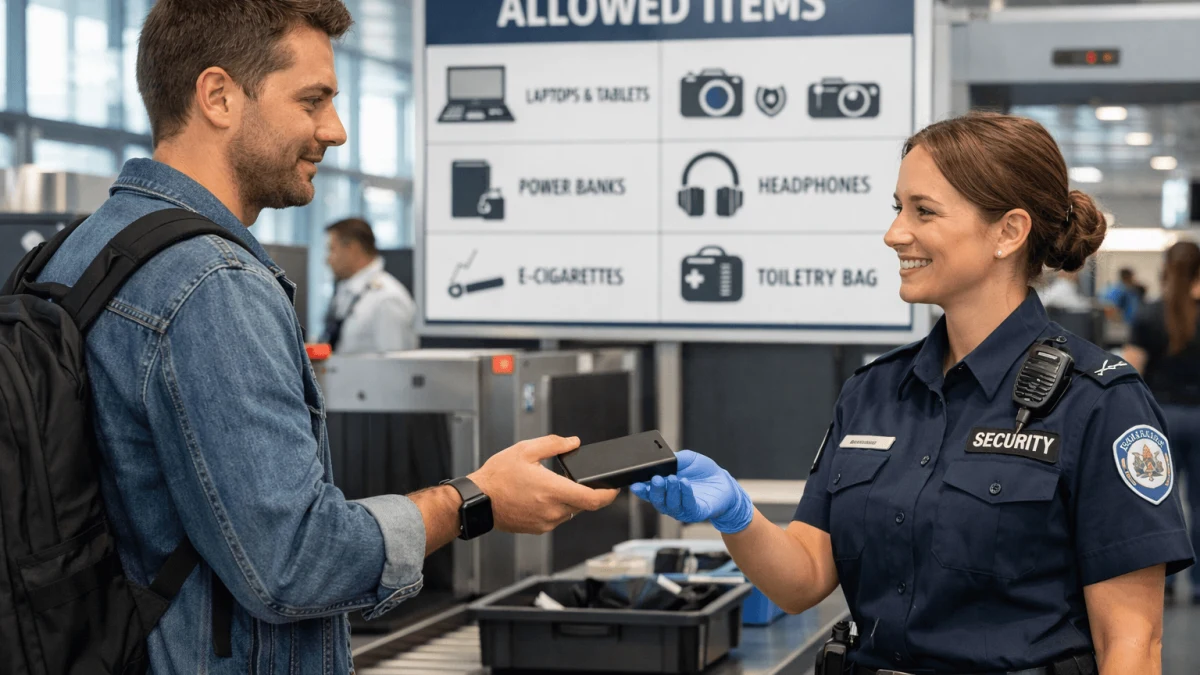
Our guide distills the complex rules surrounding power banks and air travel into practical advice, reflecting the latest web research and real traveler concerns. Whether you're a frequent flyer or planning your next adventure, these insights aim to ensure a smooth journey.
Understanding Watt-Hour (Wh) Limits
Traveling with power banks requires understanding specific airline restrictions to avoid issues during flights. Airlines typically allow power banks under 100Wh without prior approval, which makes traveling with these products hassle-free and convenient. However, for larger units ranging from 101 to 160Wh, airlines generally require advance approval, often limited to two per passenger. This is due to safety concerns associated with lithium-ion batteries. Power banks with a capacity over 160Wh are outright prohibited on passenger flights, reflecting the industry's emphasis on safety. Always ensure your power banks are packed in carry-on luggage, as they are not permitted in checked bags due to fire risk.
Having a filtered list of airline-safe power banks helps you make informed decisions, aligning your choices with travel regulations.
Before purchasing a power bank, consider not only the Wh rating but also whether the brand and model comply with airline-specific rules. Frequent mistakes include assuming all airlines follow identical guidelines or failing to account for airline-specific quirks that influence luggage checks and security screenings. Educate yourself on your carrier’s detailed battery policies by visiting their website or contacting customer service. Knowing these details can preempt logistical snags, ensuring your power bank is permitted and that you have the necessary approvals for seamless boarding.
Converting mAh to Wh Correctly
Understanding how to convert mAh to Wh correctly is crucial when evaluating power banks for travel. Many travelers find themselves confused when a power bank lists only mAh, leaving them to calculate Wh on their own. The conversion involves using the formula: Wh = (mAh × V) / 1000. The nominal voltage for most power banks is between 3.6V and 3.85V, rather than the 5V used for USB output, which often leads to miscalculations. Having accurate conversions is vital for smooth passage through airport security, where incorrect values might lead to unwanted scrutiny.
It is essential to have a clear understanding of how to perform these conversions and present them at security checks when needed. If a device doesn't state the voltage, consult the product spec sheet or contact customer support to obtain the nominal cell voltage. It's wise to carry a printed or digital copy of your conversion calculation and a photo of the power bank's label for verification at security checkpoints. Misconceptions about voltage or reliance on incorrect assumptions, such as using the output voltage, can create significant misunderstandings and delays, so ensure all information is clearly verified.
Navigating Airline Approval Processes
Obtaining airline approval for power banks between 101Wh and 160Wh can be a convoluted process, but it's a necessary step for compliance with travel regulations. This often involves contacting the airline well in advance and providing detailed documentation about your power bank, including its Wh rating, brand and model, and clear photos of its labeling. Airlines also typically require evidence of UN38.3 transport test certification, which proves the battery's durability in simulated transport conditions. The process can vary significantly from one airline to another, and acceptance is not uniformly guaranteed.
To successfully navigate this process, start by researching the specific procedures of your airline. Most airlines have dedicated channels for handling dangerous goods inquiries, and reaching out through those channels can yield the best results. It's crucial to provide comprehensive, exact information to avoid miscommunication. Allow several business days for the approval process, particularly during high travel seasons. Keep copies of all correspondence and approvals, as airline staff may request to see these at check-in or boarding. Missteps often occur from insufficient documentation or last-minute requests, so diligence and preparation are key.
Essential Safety Certifications
When purchasing power banks for air travel, attention to safety certifications is critical to ensure compliance and reduce the risk of carrying unsafe devices. Look for power banks that have been certified with UN38.3 transport testing, as this indicates the product has passed stringent safety standards required for shipping lithium batteries. Additionally, checking for UL or IEC certifications provides additional safety assurances that the device meets specific regulatory standards.
Internally, power banks should have comprehensive protections against overcharging, short circuits, and thermal issues to minimize risks during travel. While these certifications are critical for compliance, travelers should be aware that airport security rarely verifies these marks in detail, and counterfeit certifications can sometimes enter the market. Thus, choosing reputable brands with clear documentation available can improve both safety and acceptance at airport checks.
This filtered product list will highlight compliant options that enhance safety and streamline your travel experience.
Evaluation of power banks should not only focus on displaying safety certifications but also verifying their authenticity and relevancy to travel needs. Some travelers mistakenly equate consumer safety certifications with transport safety marks like UN38.3, which may not necessarily address transportation risks. Therefore, understanding the specific purpose of each certification is essential. Selecting power banks incorporating robust safety features reduces both safety hazards and the likelihood of encountering issues at checkpoints. While UN38.3 is globally recognized for shipping, CE or FCC marks focus more on regulatory compliance and electromagnetic compatibility, rather than battery transport safety.
In conclusion, always prioritize transport safety certifications when evaluating power banks for air travel, while also acknowledging the limitations of certification checks at airports.