
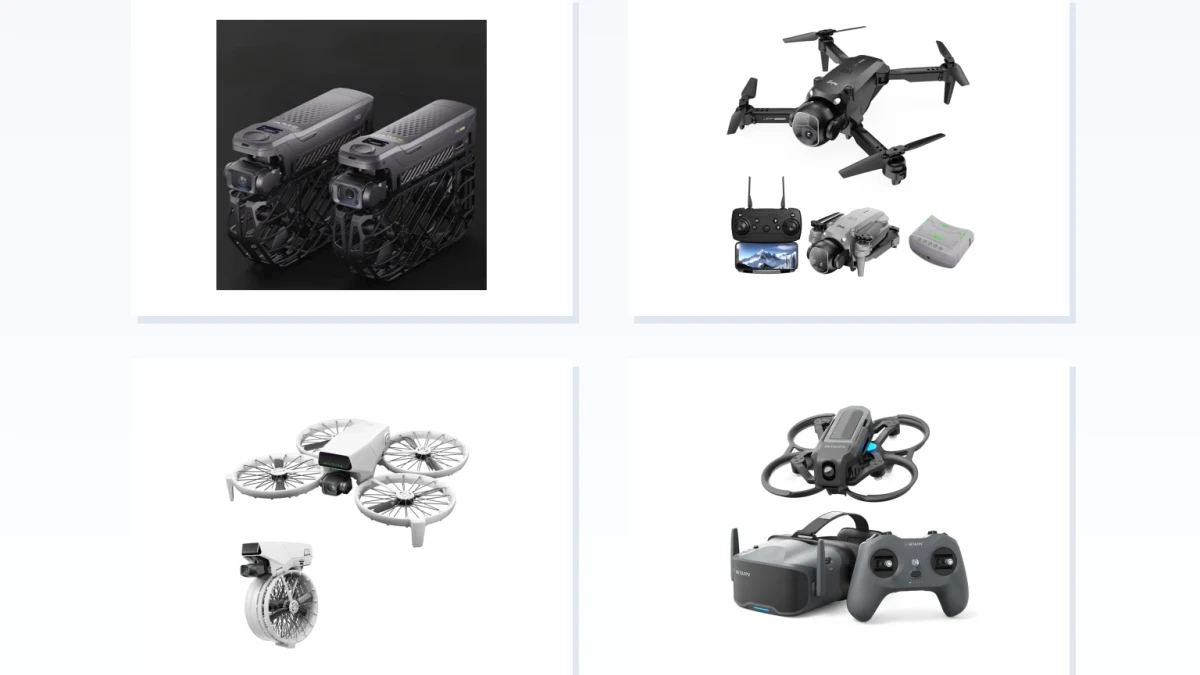
Start with what you want flying to feel like: composed aerial capture or immersive, active piloting. A standard drone listing can show a camera, but it cannot by itself tell you whether the viewing method, controls, stabilization, and included system fit the experience you want.
This comparison separates camera-first and FPV-first paths, then flags the configurations that do not fit neatly in either. Compare the flight objective first, then viewing method, control approach, setup completeness, and any hybrid features before choosing a listing.
Choose the view before you choose the drone
| What you need | Better fit |
|---|---|
| Composed aerial photos and video with conventional controls | Camera-focused drone |
| Immersive viewing and active piloting | FPV-focused drone |
| A product showing both paths, or unclear included hardware | Read the hybrid note before using either lane |
When a hybrid drone is neither answer
A camera or recording feature alone does not establish how a drone supports first-person flying. Likewise, an FPV label does not establish that the exact version includes goggles, a transmitter, batteries, or the video hardware you expect.
Pause on listings that blend imaging and immersive-viewing language without clearly stating what comes in the box. A hybrid may be a good fit, but only after you confirm the viewing system, controller, video hardware, required components, and the version being sold.
Choose Camera-First When the Shot Matters Most
Choose this path when aerial photos and video are the main reason to fly and conventional controls are the experience you want. The products shown here are useful for comparing imaging-oriented details such as camera and video specifications, imaging sensors, and stabilization or gimbal/EIS references.
Use product cards to distinguish the capture-oriented options, including listings that mention tracking or a conventional remote-control setup. Those details help frame the camera-first choice; they do not establish the same image performance, handling, or included equipment across every configuration.
Read each listing as a starting point for your capture setup. Check the exact controller, app support, storage, battery, and accessories for the version you select. If immersive goggles, a transmitter, or an FPV video system are central to your decision, move to the FPV lane rather than assuming camera hardware provides them.
A camera on the drone does not settle the FPV question
It is easy to mistake video capture for first-person flying. A camera-first drone may offer aerial video and a conventional controller without offering goggles, VR viewing, a transmitter-style control setup, or FPV hardware.
The reverse mistake matters too: an FPV product can have a camera or video transmission while still requiring you to confirm the rest of the system. Treat viewing method and control setup as separate questions from whether the drone records video.
Choose FPV When Immersive Control Is the Point
Choose FPV when first-person viewing and active piloting are important enough that you are willing to check the system around the drone. Products shown in this lane use FPV, goggles or VR viewing, real-time viewing, transmitter, racing, or freestyle references to identify that different kind of flight experience.
The setup is the key distinction. Some listings describe goggles-and-transmitter kits, while freestyle-oriented options can point to component and battery compatibility questions instead of a complete ready-to-fly package. Compare what the exact version says about the viewing and control hardware, not just the word “FPV.”
Use these products to compare immersive-viewing and active-piloting setups. Before buying, verify whether goggles, a radio controller, batteries, a video system, and any required app are included and compatible with that exact drone version. Choose the camera-first lane instead if composed aerial capture with conventional controls remains your priority.
Match the drone to the goggles, controller, app, and batteries
Before committing to either path, check the manufacturer details for the exact configuration:
- Is the controller included, and is it the control approach you want?
- For FPV, are goggles or VR viewing hardware included, and does the listed video system work with them?
- Which batteries are included, and are additional compatible batteries needed?
- Does the product require an app, storage, or other accessories to use the features you expect?
- Are the stated flight modes and camera features available on the specific version in your cart?
A product name can cover more than one bundle or component configuration. Match the complete system to the flying experience you chose first.
Do not force an unclear hybrid listing into this choice
Skip both lanes for now if the listing leaves the essentials unresolved: no clear viewing system, no identified controller, uncertain video hardware, or unspecified required components. The issue is not whether the drone belongs to a category; it is whether you can confirm the setup you would actually receive.
In that situation, compare manufacturer configuration details first. Return to the camera-focused lane if capture and conventional controls are confirmed, or the FPV lane if immersive viewing and the necessary control system are confirmed.
Treat US operating rules as a separate, current check
Product listings do not determine US operating requirements. Before flying, consult current official FAA information for the rules that apply to your planned use and location rather than relying on a product description or package note.
Choose the flying experience first, confirm the exact system second, and keep that current FAA check separate from the purchase comparison.