
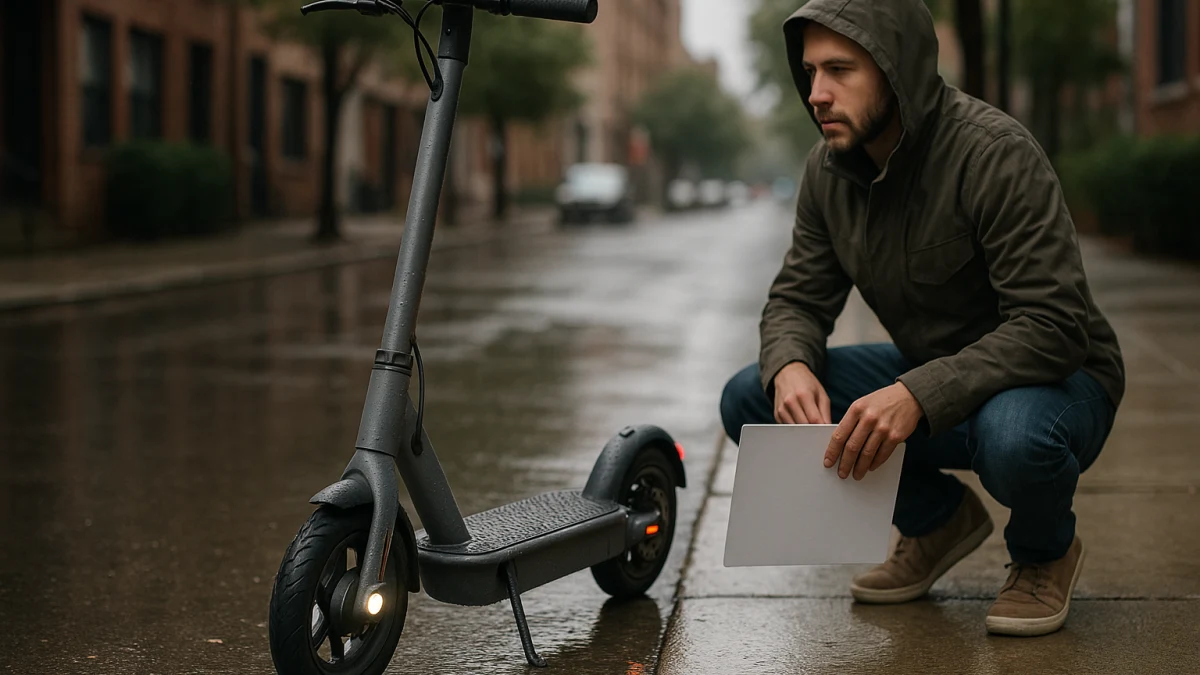
A scooter category page can place speed, range, tires, brakes, lights, and fenders side by side without explaining which details actually relate to water exposure. For light rain shopping, that distinction matters: a visible IPX5, IPX4, IP54, or Waterproof Rating field is a stronger starting point than a scooter that only has confident-looking brakes or tires.
Water-resistant shopping starts with the claim, then moves to control. Use this guide for standing electric scooters only, and use it to separate manufacturer-disclosed water-resistance wording from damp-pavement support features such as disc brakes, drum brakes, EABS, pneumatic or rubber tires, fenders, suspension, headlights, taillights, and non-slip deck language.
Start with the water claim, then check wet-street control
- If you want the strongest catalog-backed starting point for occasional light rain or damp pavement, start with IP-rated electric scooters for occasional wet pavement.
- If you already understand the limits of IP ratings and want to compare braking, tire, lighting, fender, suspension, or deck-grip cues, use feature-focused scooters only as a secondary inspection step.
- If you expect storms, deep puddles, standing water, flooding, mud, trails, or water crossings, skip this collection for that scenario; those uses are outside this page.
As you compare, keep the questions separate. First, look for a disclosed IP-style or Waterproof Rating field. Then inspect exposed component questions such as charging-port protection, battery housing details, and display electronics. After that, compare braking setup, tires, fenders, deck grip, suspension, and lighting as wet-street control and visibility cues. Finally, check warranty and maintenance language, because an IP-style rating does not automatically mean water damage is covered.
What IPX4, IPX5, and IP54 do not promise
An IPX4, IPX5, IP54, or Waterproof Rating field is useful because it gives you something specific to verify on the product page. It is not the same as a blanket promise that the scooter is waterproof, storm-proof, or safe to soak.
Read the rating together with the exact manufacturer wording. A scooter can have a water-resistance-style rating while still needing limits around wet charging, exposed ports, battery housing, display electronics, and maintenance after a wet ride. If a title or short description uses stronger waterproof language, treat the visible rating and the manufacturer documentation as the parts that need the closest inspection.
Light rain only: not storms, floods, mud, or water crossings
This collection is for occasional wet pavement, light rain, splash, and road spray. It is not a guide to riding through deep puddles, standing water, flooding, storms, mud, off-road wet terrain, or water crossings.
It also stays inside the electric-scooter category. Mobility scooters, seated scooters, kids' scooters, hoverboards, off-road models, and other non-scooter paths are not the decision problem here. If your route regularly collects water or forces you through uncertain surfaces, the right move is not just picking a scooter with better brakes or a higher-looking rating; it is checking whether the manufacturer supports that use at all.
Start with disclosed IPX and IP54 ratings
Use this group when the main question is whether the scooter gives you a visible water-resistance claim before you start comparing the usual commuting specs. The products shown here disclose an IP-style or Waterproof Rating field such as IPX5, IPX4, or IP54, which makes them better candidates for occasional wet pavement than scooters with no visible water-resistance wording.
Still, do not let the rating crowd out the practical details. Pneumatic tires, disc or electric braking, fenders, lighting, speed, range, and motor power can all matter to the ride, but they are not the reason this group leads the page. The reason to start here is the disclosed water-resistance field; the rest of the scooter specs should help you decide which rated model fits your route and comfort level.
Read these products as a shortlist for verification, not as a promise of waterproofing. If two scooters both show IP-style wording, give extra attention to the product page details around rain guidance, charging after wet rides, charging-port cover design, battery housing, and warranty exclusions. If that documentation is vague, the rating alone should not be stretched into storm, flood, submersion, mud, or water-crossing use.
Why the next scooters are only a wet-street support check
The next products may show useful damp-street cues, but they are intentionally not being treated as co-equal water-resistant recommendations. Brakes, tires, suspension, lights, fenders, and deck grip can help you compare control and visibility on damp pavement. They do not protect the battery, display, electronics, or charging port by themselves.
Use the next section only after you have understood the IP-rated group above. If a scooter lacks IP, waterproof, water-resistant, or rain wording, assume you are comparing ride-control features rather than a manufacturer-disclosed water-resistance claim.
Use feature-only scooters as a damp-street checklist
This shorter group is for shoppers who want a quick inspection pass on wet-street support features. Look for dual braking systems, front and rear braking, drum brakes, EABS, pneumatic or rubber tire details, suspension, headlights, taillights, fenders, and non-slip deck wording as control, traction, splash-management, and visibility cues—not as rain protection.
Treat these products as a checklist for how a scooter may feel and behave on damp pavement, not as proof that it is water-resistant or rain-ready. A scooter with stronger braking and tire details can still lack a disclosed rating, and local rules or product documentation may still limit wet-condition use.
Manufacturer rain and warranty checks before checkout
Before relying on any electric scooter in wet conditions, check the product page and manufacturer documentation for the exact model you are considering:
- Confirm the stated Waterproof Rating or IP-style field, if one is shown, and do not substitute brakes, tires, or lights for that claim.
- Look for rain-use guidance that explains what the manufacturer considers acceptable wet exposure.
- Inspect charging-port protection, battery housing details, display placement, exposed switches, and other electronics that could face spray.
- Check whether the manual says to dry the scooter before charging or before storage.
- Read the warranty exclusions for water damage, corrosion, misuse, and riding outside stated conditions.
- Compare braking setup separately: disc brakes, drum brakes, electric braking, dual braking systems, and EABS are control features, not waterproofing.
- Compare tires, fenders, suspension, deck grip, headlights, and taillights as damp-street comfort and visibility details.
- Check local operating rules before riding in wet public conditions, especially if your route uses streets, bike lanes, campuses, parks, or shared paths.
The best fit is the scooter whose disclosed IP-style rating, braking, tires, lighting, fenders, maintenance needs, and warranty language all match occasional wet pavement—without treating water resistance as waterproofing.