
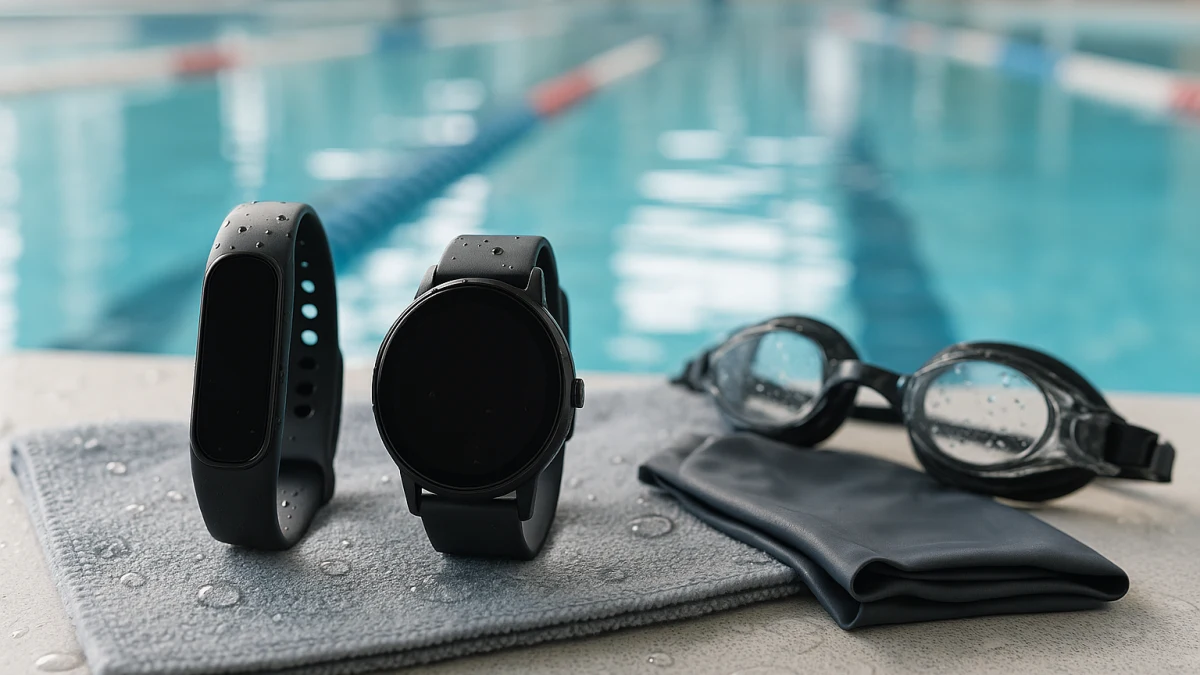
Water-resistant wording is only the start of choosing a swim-use wearable. A product card may say IP68, 5 ATM, waterproof, water-resistant, swim mode, or 100+ sports modes, but those phrases do not all answer the same question. Before comparing products, decide whether you want a slim fitness tracker for lower-distraction activity tracking or a smartwatch that earns its extra wrist space with a bigger screen, notifications, Bluetooth calling, apps, and richer workout views.
This collection exists because a normal category page can surface water-rated wearables, but it usually will not separate water exposure from swim training. Lap tracking, stroke detection, open-water GPS, underwater heart-rate accuracy, water-lock behavior, band guidance, and warranty coverage all remain model-specific checks.
Choose by swim screen needs before trusting the rating
| If your main need is… | Better fit |
|---|---|
| A slim, lower-distraction band for activity, sleep, heart-rate, sports-mode, and battery-life tracking with visible IP68, 5 ATM, or water-resistant cues | Swim-capable fitness tracker |
| A larger display, richer workout screens, notifications, Bluetooth calling, voice assistant features, or iOS/Android smart functions along with water-resistance cues | Swim-capable smartwatch |
| A discreet device for passive health, sleep, heart-rate, SpO2, stress, or activity trends that can tolerate water exposure | Water-resistant smart ring as a boundary option |
| Dependable lap tracking, open-water GPS, stroke detection, underwater heart-rate accuracy, or warranty clarity for pool or salt water | Check the manufacturer’s swim-mode, water-lock, supported water use, and warranty guidance before choosing either core lane |
Use the rating language as a starting filter, then compare the experience you will actually have in the water: display readability, swim-mode wording, water-lock behavior, buttons, speakers, microphones, battery life, comfort, band material, sensor expectations, and post-swim care.
Water ratings are not a universal swim pass
IP68, IPX8, 5 ATM, 10 ATM, waterproof, and water-resistant language should not be read as one universal permission slip for every pool, ocean swim, shower, hot environment, or pressure condition. These terms point to product-specific limits, and different brands may explain those limits differently.
That is why the safer question is not “Is it waterproof?” but “What water use does this exact model support?” Look for the manufacturer’s wording around swimming, pool water, salt water, water lock, buttons, speakers, microphones, charging after exposure, and warranty exclusions.
What the listings can prove—and what they cannot prove in water
The products shown here can help you screen for visible water-related cues: IP68, IPX8, 5 ATM, 5ATM, waterproof, water-resistant, swimming, sports modes, heart-rate monitoring, SpO2, sleep tracking, activity tracking, battery-life claims, and phone compatibility.
What the product cards do not consistently prove is just as important. Do not assume a listing has reliable pool lap counting, stroke detection, open-water swim tracking, underwater heart-rate accuracy, underwater SpO2 accuracy, or warranty coverage just because it uses water-resistant language.
Not dive computers, not waterproof gadget gear
This page stays inside fitness trackers and smartwatches with visible swim or water-resistance cues. Smart rings appear only as a boundary option for shoppers who want passive trends in a water-tolerant device.
It does not cover dive computers, waterproof headphones, phone cases, action cameras, GPS navigation gear, or professional aquatic safety equipment. If you need diving, rescue, navigation, or certified safety functions, this is the wrong comparison set.
Slim fitness trackers for pool routines and wet workouts
Choose this lane if you want a lighter, simpler wearable for daily activity, sleep, heart-rate, sports modes, and battery-life tracking without the bulk or distractions of a smartwatch. The tracker-style products shown here surface water-resistance or swim-use cues such as IP68, 5 ATM, 5ATM, waterproof, water-resistant, swimming, or similar wording.
The useful comparison is not just the rating. Check battery life, display size, comfort, band style, and sports-mode count. A slim tracker can be a good fit for pool routines and wet workouts when you mainly want passive activity context and a basic wrist display, but the visible water language does not automatically prove lap accuracy or advanced swim metrics.
Read these products as screened candidates, not as confirmed swim-training tools. If a tracker looks right, open the product page and verify supported water use, pool and saltwater guidance, band care, and warranty limits. If you want larger workout screens, calling, notifications, voice assistant features, or more phone-like controls, continue to the smartwatch lane instead.
When the smartwatch earns the extra wrist space
A smartwatch starts to make more sense when the screen and smart features are part of the workout. Look for the practical upgrades: a larger display, easier-to-read workout views, 100+ sport-mode language, notifications, Bluetooth calling, voice assistant features, heart-rate monitoring, SpO2, sleep tracking, and iOS/Android compatibility.
The tradeoff is that more hardware creates more checks. Water-lock wording, buttons, speakers, microphones, shower guidance, saltwater limits, and charging instructions all matter more when the watch is doing more than basic tracking.
Smartwatches for swimmers who want screens, apps, and water cues
This lane is for shoppers who want water-resistance cues plus a fuller daily wearable. The smartwatch products shown here commonly surface IP68, 5 ATM, waterproof, or water-resistance wording, often alongside larger displays, sport modes, phone notifications, Bluetooth calling, and broader compatibility claims.
A smartwatch is not automatically the better swim device. It is the better fit when you will actually use the larger screen and connected features during the day or around workouts. Compare display size, battery life, sport-mode wording, phone compatibility, swim-mode language, and any water-lock guidance.
Use these products to compare the screen-and-smart-feature side of the decision. Do not treat IP68 as the same thing as 5 ATM or 10 ATM for every swim condition, and do not assume every water-resistant smartwatch includes pool lap tracking, open-water tracking, stroke data, or precise underwater sensor readings.
Where smart rings stop being swim-training devices
Smart rings can look tempting because some listings mention IP68, 100 meters, 100m, waterproof, water-resistant, or swimming-mode wording. That still does not make a ring a substitute for a watch or band if you need a readable swim screen, real-time lap feedback, water lock, or workout controls.
Think of this category as a water-tolerant companion for passive health and activity trends, not a primary swim-training display.
Smart rings: water-tolerant companions, not swim-training screens
Consider a smart ring only if you mainly want a discreet device for passive health, sleep, heart-rate, SpO2, stress, activity, or battery-life trends without wearing a wrist display. The ring products shown here include water-resistance cues such as IP68, 100 meters, 100m, waterproof, or water-resistant wording.
This is a boundary option, not a third equal lane. Even when a ring mentions swimming mode or a depth-style rating, verify the manufacturer’s limits for pool water, ocean water, showers, soap, heat, pressure, and warranty coverage. For swim workout feedback, return to the fitness tracker or smartwatch sections.
After the pool: rinse, dry, and check the band
Post-swim care can matter as much as the rating printed on the listing. Chlorine, salt water, soap, shower exposure, heat, wet buttons, speakers, microphones, and band materials may all be handled differently by different manufacturers.
After water exposure, check the product’s care instructions for rinsing, drying, avoiding charging while wet, and maintaining the band. Also confirm whether the band that ships with the device is the one recommended for pool or saltwater use, or whether the brand suggests a different material for frequent swimming.
Model-specific swim checks before checkout
Before choosing any water-rated wearable, verify these points on the product page or manufacturer support page:
- Whether the model explicitly supports swimming, not just general water resistance.
- Whether it lists pool swim, open-water swim, or only broad sports modes.
- Whether lap tracking, stroke detection, or open-water GPS are actually named features.
- Whether water lock is included and how it works.
- What the brand says about pool water, salt water, showers, soap, heat, and pressure.
- Whether heart-rate or SpO2 readings are limited during water use.
- What band materials are recommended for wet workouts.
- What water-related damage or misuse may be excluded from warranty coverage.
Match the device to your routine first: slim tracker for simple, lower-distraction activity tracking; smartwatch for screen space and connected features; smart ring only for passive water-tolerant trends. Then let the manufacturer’s supported water use, care instructions, and warranty limits decide whether the specific model belongs in your swim bag.