
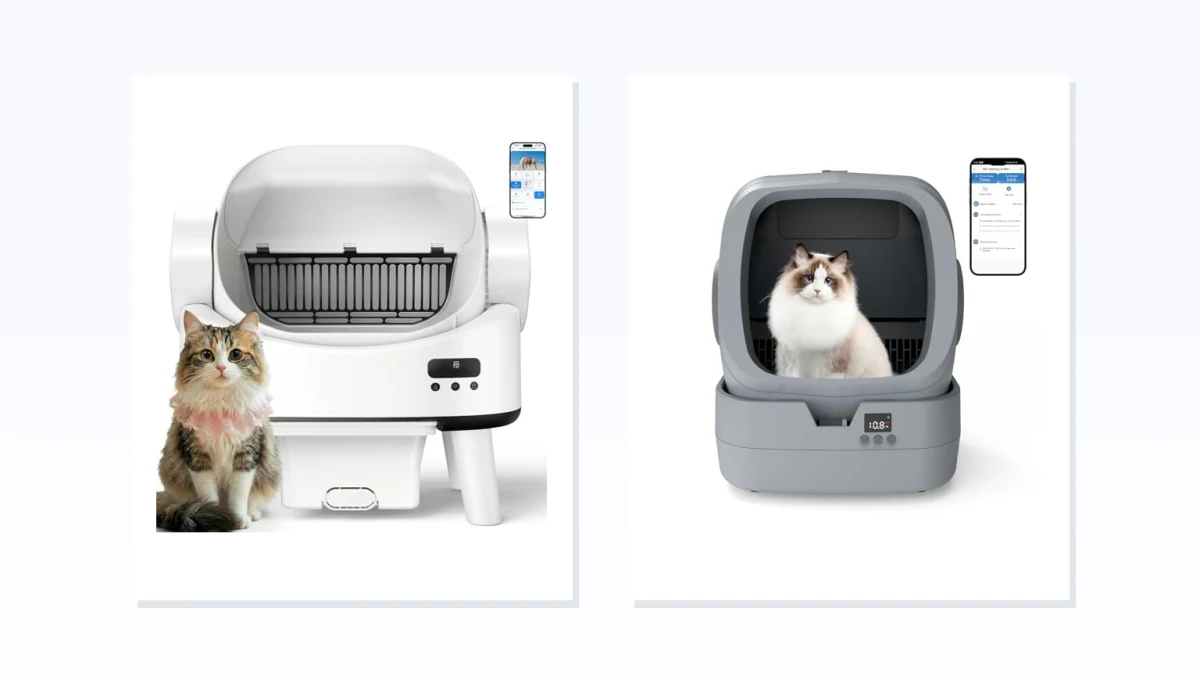
Rake/sifting and rotating drum/globe boxes both promise fewer hands in the litter box, but they test a cat differently. A rake or sifter moves through an open or low-sided tray and removes clumped waste where you can see it. A rotating drum or globe seals litter inside an enclosed chamber and turns to separate waste from clean litter. This guide makes that mechanism visible from the product cards themselves: washable sifters, removable rakes, dual-rake designs, mesh sifter options, washable drums, 65 L globes, and fully enclosed drum designs.
A normal category page can list self-cleaning boxes without explaining why the rake path depends on clumping litter and open-tray acceptance while the drum path depends on enclosed-entry tolerance and per-model safety checks. Those are the differences that decide whether the box gets used. Across both groups, the comparison tracks cat entry and acceptance, litter compatibility, odor and waste handling, maintenance load, safety verification, and cycle noise, without ranking either mechanism as universally quieter or better.
Rake or drum: the first fit check
| If your situation is... | Better starting point |
|---|---|
| Your cat uses an open or low-sided tray, and you want visible waste removal with a clumping litter. | Rake/sifting mechanism boxes |
| Your cat tolerates an enclosed or semi-enclosed entry, and sealed odor control plus hands-off sifting is the priority. | Rotating drum/globe mechanism boxes |
| You need to confirm rotation-pause, anti-pinch, or weight-detection behavior before trusting an enclosed drum. | Rotating drum/globe mechanism boxes, after per-model safety verification |
What this rake-vs-drum guide leaves out
This page compares only self-cleaning boxes with a named rake/sifting or rotating drum/globe mechanism. Manual sifting boxes, non-self-cleaning covered boxes, app-connectivity-only devices, and litter chemistry guides are out of scope. If your real question is clay versus tofu versus mineral litter, this is not the page that answers it.
'Automatic' without a mechanism: how each product lands in a lane
Automatic is a label, not a cleaning mechanism. The two sections below are separated by the terms a listing actually shows. Rake/sifting cards tend to name rakes, sifting, sifters, a removable rake, a dual-rake design, or mesh sifter options. Drum/globe cards tend to name a drum, globe, rotating chamber, washable drum, 65 L globe, or fully enclosed drum. If a card says only self-cleaning and never names the mechanism, treat it as a borderline case: open the product page before deciding which side of the comparison it belongs on.
Rake and Sifting Self-Cleaning Litter Boxes
Start with the box your cat can enter. Rake/sifting models often emphasize open-top or low-entry access, with the cleaning action visible in the tray. That matters because the main failure mode in self-cleaning litter boxes is not usually the motor; it is a cat that declines the new box.
The listings in this section help because they name the cleaning action. Look for washable sifters, a removable rake, a dual-rake design, or mesh sifter options, and check whether the parts that touch clumped waste actually come out for cleaning. Some listings also describe compatibility with clumping, tofu, or mineral litter, so compare that against the litter you already buy rather than assuming any clumping formula will work.
Use the products shown here to compare the visible mechanism and its upkeep surface: how the rake or sifter moves, which parts wash or remove, and what litter requirements the card states. Do not read this section as proof that rake boxes are quieter or more cat-accepted than the drum section; those differences are per model. If your cat prefers a covered space or you want sealed waste storage instead of tray-level removal, the drum/globe section below is the more direct fit.
Rake part scrubbing vs drum bin emptying: two different upkeep loads
Rake upkeep and drum upkeep are different chores, not different flavors of the same chore. With a rake/sifting box, the repeated task sits at tray level: pull the rake or sifters, wash the parts that collect clumped litter, and keep the sifter mesh clear. Several listings call out washable sifters or removable rake parts, so confirm which components actually separate from the base.
With a rotating drum or globe, the repeated task centers on the enclosed chamber and its waste bin. Listings may describe a washable or liftable drum, but a sealed design does not erase waste-bin emptying and cleaning. Choose the chore you will still do during a busy week; that is often a better predictor of long-term use than the cycle length on the box.
Rotating Drum and Globe Self-Cleaning Litter Boxes
The drum/globe path trades an ordinary tray entry for an enclosed chamber and sealed waste storage. Listings in this section identify the design through terms such as fully enclosed drum, washable drum, or a 65 L globe. Odor containment is the usual reason to choose this path, but it only holds up if the waste bin stays on an emptying schedule.
Before buying, scan the cards for named safety behavior instead of assuming the form factor includes it. Some listings mention anti-pinch protection, weight detection, or pause-on-entry. These are per-model features. If a card does not name them, open the product page and confirm what the rotation cycle does when it detects a cat.
Use the products shown here to compare enclosure type, washable drum claims, and which safety features the listing actually states. A sealed drum that matches your cat's tolerance and has verifiable rotation pauses can be a good hands-off fit, but no sealed drum is universally safe or universally rejected. If your cat currently uses an open tray and is sensitive to change, the rake/sifting section above is the lower-risk starting point.
Safety, pause, and pinch claims: verify each model before trusting it
Enclosed rotating mechanisms carry pinch and rotation risk by design, so treat safety as a per-model checklist item rather than a form-factor guarantee. Anti-pinch protection, weight detection, and pause-on-entry appear on some drum/globe listings, not all. This guide does not assert recall, injury, or entrapment history. If those issues matter to you, consult official regulator records and the manufacturer's current safety information for the specific model before purchase.
Before you buy: mechanism checks the spec sheet can hide
- For a rake/sifting box, confirm whether the rake is removable or washable, how the sifter mesh is cleaned, and which litter types the manufacturer lists. Card-level openness does not tell you the exact tray height or entry clearance.
- For a drum/globe box, confirm the enclosure type, waste-bin emptying steps, the washable drum claim, and which rotation-pause, anti-pinch, or weight-detection behaviors are actually named.
- If an automatic listing names no mechanism at all, open the product page before comparing it with the models above.
- Do not rank the two mechanisms by quietness or durability unless a specific product page gives measured or specified data.
Treat this as a cat-tolerance and verification exercise rather than a search for the best mechanism. Choose the box your cat will actually enter, then verify the parts, litter requirements, and safety pauses on the exact model you are considering. Neither rake nor drum is a universal upgrade.