
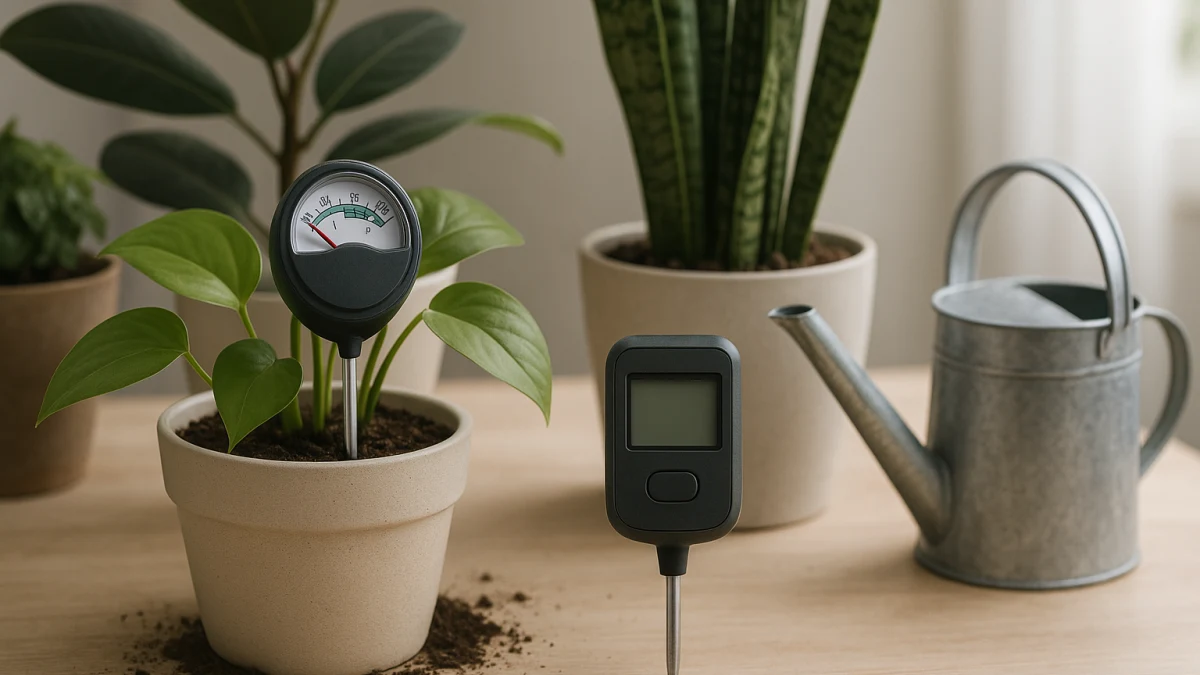
This collection is for a local moisture check, not a smart-plant setup. A normal soil moisture sensor page can mix dial probes, color-change indicators, LCD testers, Wi-Fi monitors, hubs, weather-station add-ons, and irrigation controllers in one long list. Here, the split is simpler: no-battery analog checks first, then basic digital LCD testers for shoppers who still want a screen.
Use this page to avoid hidden dependencies before you buy. The products shown here should help with manual watering decisions without requiring a phone app, cloud account, subscription, hub, or remote-alert workflow. The tradeoff is not just analog versus digital; it is readout style, setup dependency, battery upkeep, probe care, and whether the product is meant for spot checks or continuous leave-in use.
Fast split: pointer, color change, LCD, or phone alert
| If you need... | Better fit |
|---|---|
| The lowest-maintenance local check with no battery routine | An analog probe meter with a dial, pointer, color-coded zone, or color-change indication |
| A clearer screen-based reading and you are comfortable replacing batteries | A basic standalone digital soil moisture meter with a built-in LCD, often using AAA batteries |
| Remote notifications, phone alerts, or away-from-home monitoring | A separate app-alert soil moisture sensor path, not this manual no-app collection |
| A probe that stays in the pot continuously | Only a product that specifically supports leave-in or continuous use |
When comparing products, start with the readout. A dial, pointer, color zone, or color-change indicator keeps the check simple. A digital LCD can be easier to read, but it adds batteries and makes no-app status more important to verify. Also check the care instructions: many probes are best treated as spot-check tools that should be removed and wiped clean after use.
Choose by readout: pointer, color change, or local LCD
The fastest way to choose is to ignore brand ranking at first and look at how the reading is shown.
- Dial or pointer: best for a quick analog-style check before watering, especially when the listing says no battery or battery-free.
- Color-coded zones: useful when you want a simple visual cue rather than a number.
- Color-change indication: can be a good no-battery option, especially for shoppers who prefer a visual indicator, but check whether the product is meant to stay in the pot.
- Built-in LCD or large screen: a better fit if you want a clearer display and accept battery replacement.
- Phone alert or wireless monitoring: outside the main comparison here.
The key question is whether the meter works locally at the plant. If the listing pushes pairing, cloud monitoring, hubs, app notifications, or irrigation automation, it belongs outside this simple watering-check frame.
Keep remote alerts, hubs, and irrigation controls out
Some products near this category are not really manual moisture meters. Watch for Wi-Fi sensors, Zigbee devices, smart plant monitors, weather-station pairings, gateway-based systems, and irrigation controllers. They may be useful for remote monitoring, but they solve a different problem.
This page keeps those products out of the main comparison because they can add exactly the dependencies many shoppers are trying to avoid: phone setup, account creation, wireless pairing, cloud services, subscriptions, hubs, and alert workflows. If your real need is an away-from-home notification, choose that path deliberately instead of buying a manual probe and expecting it to behave like a smart monitor.
Analog probes: no-battery checks before you water
Choose this lane if you just need a simple probe, dial, pointer, or color-change indicator to check soil before watering. These are the lowest-maintenance options when the product page clearly describes no-battery operation, an analog readout, color-coded zones, or a battery-free visual moisture indication.
This is also the better fit if you want to avoid phone pairing, LCD screens, hubs, remote alerts, and irrigation-control features. Do not assume every probe-style product is battery-free, though; look for wording such as no battery, battery-free, analog, dial, pointer, or no-battery visual indication.
Read the products shown here as analog-style local checkers, not as a promise of perfect readings in every soil or potting mix. They can help you compare simple readout styles and maintenance expectations, but they should not be treated as guaranteed plant-health protection or as a substitute for checking the product’s care instructions.
Probe care and leave-in limits before moving to LCD
Before switching to a digital screen just for convenience, check how the probe is supposed to be used. Many soil probes are spot-check tools: insert the probe, take the reading, remove it, and wipe it clean. That care step matters because a probe that is left in soil when it is not designed for continuous placement may not match the intended use.
Leave-in use should be explicit. A color-change moisture indicator or plant moisture sensor may be positioned for staying with the plant, but do not assume that from the shape alone. Look for product-page language that clearly supports leave-in or continuous use if that is part of your routine.
Basic digital LCD testers: clearer readings without smart monitoring
Choose a basic digital tester if you want a local screen instead of a dial. The right products in this lane have a built-in digital LCD or large display and are meant to show readings on the device, not through a phone app or remote dashboard.
The tradeoff is battery upkeep. The accepted product patterns here are battery-powered, commonly using AAA batteries, so this is not the battery-free lane. Digital models may also combine moisture with other local readings such as pH, temperature, fertility, sunlight, or humidity. Treat those as helpful context, not as laboratory-grade measurements that will perform identically in every growing medium or fertilizer condition.
Because digital listings can be less clear about hidden dependencies, verify the product page before buying. A local LCD is a good sign, but it does not by itself prove there is no app, account, hub, cloud connection, pairing step, or subscription.
Use these products to compare screen size, local display style, battery requirements, and extra measurement modes. If you mainly want zero battery maintenance, go back to the analog lane. If you want phone alerts or remote monitoring, this local LCD lane is still the wrong place to shop.
No-app verification: batteries, pairing, hubs, and subscriptions
Before you choose, run through the dependency checks that ordinary category pages often bury:
- Local readout: Does the product show moisture on a dial, pointer, color indicator, or built-in screen without needing a phone?
- App requirement: Is an app optional, or is it required to see the reading?
- Account or cloud setup: Does the product require account creation, cloud pairing, or online services?
- Hub or gateway: Does it need a Wi-Fi hub, Zigbee gateway, weather station, or controller to work?
- Subscription language: Are alerts, history, or features tied to an ongoing service plan?
- Battery burden: Is it no-battery analog, or does it need AAA or other replaceable batteries?
- Use style: Is it a spot-check probe that should be removed and wiped clean, or is leave-in use clearly supported?
- Measurement scope: Are pH, fertility, sunlight, temperature, or humidity readings presented as local guidance rather than guaranteed precision?
The simplest match is the one that fits your real watering routine. Pick analog if you want a no-battery spot check, pick basic digital if a local LCD is worth battery replacement, and only move to an app-alert product if remote notifications genuinely matter.