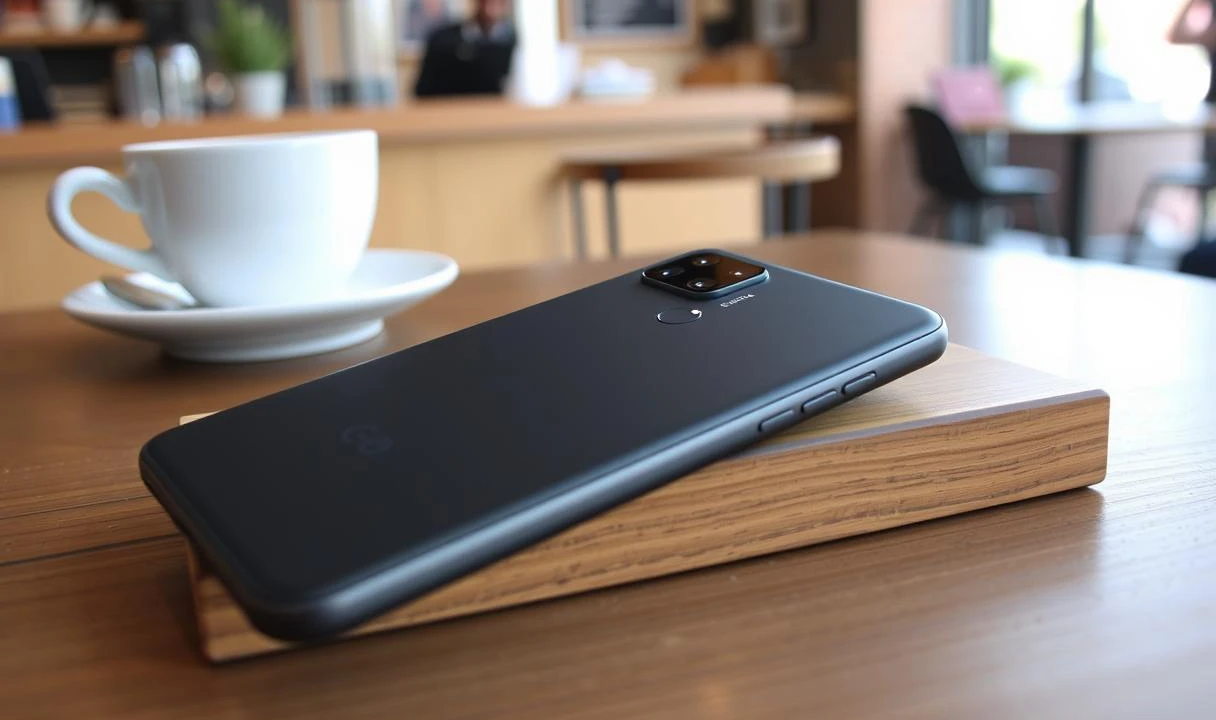
The Pixel 9a is Google's argument that a mid-range phone does not need to feel compromised. Instead of chasing headline specs, it focuses on the areas that matter most in daily use: display quality, camera consistency, battery life, and a clean Android experience.
That approach makes it especially relevant for buyers who want a dependable smartphone around the $500 mark without moving into flagship pricing. The Pixel 9a is not built to impress with raw power alone, but it is built to feel well judged.
Design and display
The Pixel 9a keeps the familiar Pixel design language while trimming back the materials and finishing details enough to hold the price lower. Its 6.3-inch OLED display, 120Hz refresh rate, and strong peak brightness do most of the visible work here, because those are the things users notice first in everyday handling.
Thicker bezels and a recycled polycarbonate back remind you that this is not Google's premium tier, but the trade-off is reasonable. The lighter construction, aluminum frame, and IP68 rating still give it a reassuringly durable feel for a phone in this class.
Performance for everyday use
With Google's Tensor G4 chip and 8GB of RAM, the Pixel 9a is aimed squarely at mainstream usage rather than enthusiast-level speed. Messaging, browsing, photos, maps, streaming, and light multitasking should all feel comfortably within scope.
That does not make it the best fit for buyers who prioritize gaming performance or sustained heavy workloads. What it does offer instead is a stable, modern Android experience with Google's broader software features layered on top, including practical AI tools and safety-oriented extras.
Camera quality without flagship pricing
Camera performance remains one of the strongest reasons to consider the Pixel line, and the Pixel 9a carries that advantage into a lower price band. Its 48MP main camera and 13MP ultra-wide setup are not the most aggressive hardware combination on paper, but Google's image processing still gives the phone a strong day-to-day photographic edge.
That matters more than spec-sheet drama for many buyers. Good exposure, consistent color, and reliable low-light behavior are often more useful than having extra lenses that rarely perform well. The lack of a dedicated telephoto camera is noticeable, but Super Res Zoom softens that limitation for casual use.
Battery life and charging trade-offs
The 5,100mAh battery is one of the Pixel 9a's clearest strengths. Endurance is strong enough to make the phone feel more practical than some of its pricier Pixel siblings, especially for users who spend long days away from a charger.
The compromise comes on charging speed. Wired charging is serviceable rather than fast, and wireless charging is even more conservative. That means the Pixel 9a works best for users who value long runtime more than quick top-ups.
Who the Pixel 9a makes sense for
- Buyers who want a clean Android phone around the $500 range
- Users who care about camera quality more than raw performance benchmarks
- People who want strong battery life and a dependable everyday experience
- Shoppers who prefer balanced value over flashy flagship extras
Bottom line
The Pixel 9a is not trying to be the most powerful or most luxurious phone in its category. Its value comes from how little feels seriously compromised for the price.
If your priorities are camera reliability, display quality, long battery life, and a straightforward Android experience, the Pixel 9a makes a credible case as one of the safer mid-range choices.